Last updated: November 2026
Pet insurance for Yorkshire Terriers
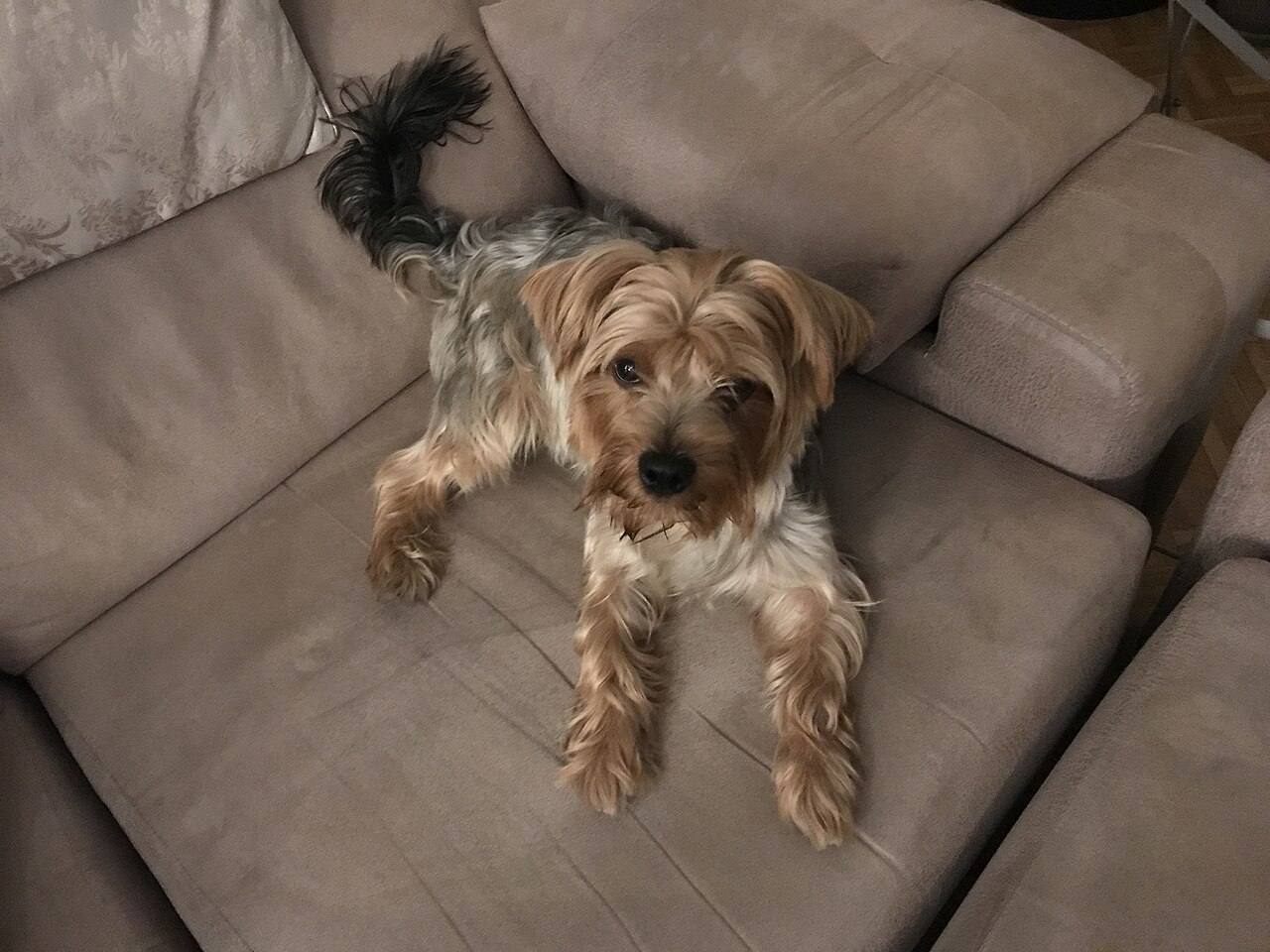
A tiny, spirited terrier with a big personality and a long life ahead, happiest close to their people. The AKC lists life expectancy at 11 to 15 years, and UK VetCompass life tables put life expectancy at birth at 12.5 years, the second highest of the 18 breeds studied. The AKC breed standard caps a Yorkie at 7 pounds, yet the median adult pet Yorkie in UK VetCompass records weighed about 5.1 kg (about 11.2 pounds), heavier than the show standard, so real pet Yorkies often run bigger than the standard suggests. The honest planning story is teeth first by a wide margin, knees second, then a list of inherited conditions where early enrollment and breeder questions matter more than any statistic.
Enroll as a puppy, before the first dental finding or retained tooth note is recorded. In this breed the first vet note usually concerns teeth, and everything after it is pre-existing.
Cost figures are typical ranges, not quotes or guarantees. Your premium depends on your yorkie's age, your zip code, and the deductible and reimbursement level you choose.
Common health issues in Yorkshire Terriers
Dental disease, periodontal disease and retained baby teeth
Risk level: Common / expensive
Teeth are this breed's headline health story. In a VetCompass study of UK primary care records, periodontal disease was the most commonly diagnosed disorder in Yorkshire Terriers, recorded in 21.1% of a random sample of 3,308 dogs in a single year (2016), and the study's authors named periodontal disease, retained baby teeth, and slipping kneecaps as disorders Yorkies appear predisposed to. Retained baby teeth were recorded in 3.6% of the sample, and a puppy mouth where baby teeth stay in place crowds the adult teeth and traps plaque. For context across dogs generally, the AVMA puts periodontal disease at nearly 80% of dogs by age three, a general dog figure, not a Yorkie figure. A routine professional cleaning typically runs $300 to $700, and dental care repeats across a long life, which is why this breed's mouth deserves a plan from puppyhood.
Patellar luxation (slipping kneecap)
Risk level: Common / expensive
A slipping kneecap is the breed's second story. In the same VetCompass breed study, patellar luxation was recorded in 3.4% of the 3,308-dog sample in 2016, well above the 1.0% previously reported for dogs overall in the UK. An earlier VetCompass study of dogs in England put overall patellar luxation prevalence at 1.3% and found Yorkshire Terriers among the breeds at increased odds compared with crossbreds; the breed study cites Yorkie odds at 5.5 times those of crossbreds, exceeded only by Pomeranians and Chihuahuas. Not every slipping kneecap needs an operation, and many mild cases are managed with weight control and monitoring. When surgery is the right call, published guides put it at about $1,000 to $5,000 per knee, printed here as guide ranges.
Tracheal collapse
Risk level: Common
Yorkshire Terriers make up a strikingly large share of tracheal collapse cases: about a third to two-thirds across the published case series reviewed in the Journal of Small Animal Practice, and one animal welfare synthesis puts the breed at about 65% of cases. Those are shares of tracheal collapse cases, not the share of Yorkies who develop the condition, and no trustworthy breed rate exists, so this page prints none. The sign owners notice is a dry, honking cough, often triggered by excitement, pressure on the neck, or hot weather. Most cases are managed medically with weight control, a harness instead of a collar, and medication, with stents or surgery reserved for severe cases, so a honking cough in this breed is worth a vet visit rather than a wait and see.
Liver shunt (congenital portosystemic shunt)
Risk level: Common
A congenital portosystemic shunt is an abnormal blood vessel that lets blood bypass the liver, so toxins the liver would normally clear stay in circulation. In the largest teaching hospital study, covering 2,400 dogs diagnosed with congenital shunts at teaching hospitals between 1980 and 2002, Yorkshire Terriers had the greatest total number of diagnoses of any breed, and diagnoses made up 2.9% of Yorkie diagnoses in that referral database. That 2.9% is a share of teaching hospital diagnoses, not a lifetime risk for a pet Yorkie, and it is printed with that label. Signs can be vague, including poor growth, disorientation after meals, and unusual tiredness, which is why a vet workup matters early in a puppy who is not thriving.
Legg-Calve-Perthes disease
Risk level: Less common
A condition of young small dogs in which the head of the thigh bone loses its blood supply and weakens. A University Federation for Animal Welfare synthesis notes a strong breed predisposition in small breeds, especially terriers, that Yorkshire Terriers were the most commonly affected breed in a long-term treatment outcome study, and that evidence in this breed points to recessive inheritance, with no genetic test available. Signs typically appear at about 4 to 12 months of age, often as a hind leg limp in a puppy who was thriving weeks earlier. Care ranges from rest and pain relief in mild cases to surgery in more severe ones, so a puppy limp that does not settle deserves a vet visit and a note in the record.
What does pet insurance cost for a Yorkshire Terrier?
Start from the $62.44/month national dog average (NAPHIA, 2024 data) as an estimate only; Yorkshire Terriers are a tiny breed (7 to 8 inches, with the AKC standard capping weight at 7 pounds), so quotes often sit near or below that average, and there is no trustworthy breed-specific price to quote here. The value of a policy concentrates in years of dental care across a long life, one possible knee surgery, and lifelong management if the trachea or liver conditions appear. A long life also means more premium years and more senior care years than almost any other breed on this site, which is the honest lifetime cost point for a Yorkie.
For context, the national average premium for dogs is roughly $62/month - but breed, age, and location move that number a lot. Estimate your premium with our cost calculator, or see the bigger picture in our lifetime cost projector, which compares a common emergency bill with and without coverage.
Dental care is a recurring cost for this breed, so it helps to know the numbers early. Our dog teeth cleaning cost guide breaks down the typical $300 to $700 cost of a routine cleaning and what can push a bill higher.
What to look for in a policy for a Yorkshire Terrier
- Enroll as a puppy, before the first dental finding or retained tooth note is recorded. In this breed the first vet note usually concerns teeth, and everything after it is pre-existing.
- Check whether dental illness, not just dental injury, is covered, because periodontal disease is this breed's most common diagnosis and routine cleaning is often a wellness add-on question.
- Confirm that hereditary conditions are covered, because slipping kneecaps, tracheal collapse, and liver shunts are this breed's inherited core.
- Ask about orthopedic waiting periods, because knee surgery is a real possibility in this breed and some plans impose a waiting period before it is covered.
- Keep the deductible at a level you can pay on a hard day without hesitation - the policy only protects your dog if you can afford to use it.
Compare insurers for your yorkie
Typical plan options from major insurers:
| Insurer | Reimbursement | Annual limit | Waiting periods | Standout feature | Quote |
|---|---|---|---|---|---|
| Spot | 70%, 80% or 90% | $2,500 - unlimited | 14 days (accident & illness) | Preventive-care add-on available. | Get a quote |
| Trupanion | 90% | Unlimited payouts (no annual cap) | 5 days (injury) / 30 days (illness) | Per-condition lifetime deductible; direct vet payment option. | Get a quote |
| Embrace | 70%, 80% or 90% | $5,000 - $30,000 | No wait (accident) / 14 days (illness) / 6 mo (orthopedic, varies by state) | Deductible shrinks $50 each claim-free year. | Get a quote |
| Pets Best | 70%, 80% or 90% | $5,000 or unlimited | 3 days (accident) / 14 days (illness) / 6 mo (cruciate) | Wellness add-on; short accident waiting period. | Get a quote |
| Lemonade | 70%, 80% or 90% | $5,000 - $100,000 | No wait (accident, most states) / 14 days (illness) / 30 days (orthopedic) / 6 mo (cruciate) | Preventive packages; not offered in every state. | Get a quote |
| ASPCA Pet Health Insurance | 70%, 80% or 90% | Multiple annual-limit options | 14 days (accident & illness) | Preventive-care add-on available. | Get a quote |
| Figo | 70%, 80%, 90% or 100% | Up to unlimited annual max | 1 day (accident) / 14 days (illness) / 6 mo (orthopedic) | One of the few with a 100% reimbursement option. | Get a quote |
| Fetch | 70%, 80% or 90% | $5,000 - unlimited | No wait (accident) / 15 days (illness) / 6 mo (orthopedic) | Covers sick-visit exam fees. | Get a quote |
Plan options shown are typical ranges widely published by each insurer; details change and vary by state. Always confirm current terms on the insurer's website before enrolling. Quote buttons link directly to each insurer's website. We don't earn a commission on these links yet.
Other breed guides
- French Bulldog
- Labrador Retriever
- Golden Retriever
- German Shepherd
- Goldendoodle
- Dachshund
- Rottweiler
- Bulldog
- Cavalier King Charles Spaniel
- Shih Tzu
- Boxer
- Australian Shepherd
- German Shorthaired Pointer
- Pembroke Welsh Corgi
- Bernese Mountain Dog
- Border Collie
- Miniature Schnauzer
- Cocker Spaniel
- Great Dane
- Chihuahua
- Pug
- Havanese
- Boston Terrier
- Doberman Pinscher
- Vizsla
- Australian Cattle Dog
- Shetland Sheepdog
- English Springer Spaniel
- Belgian Malinois
- Rhodesian Ridgeback
- Bichon Frise
- Siberian Husky
- Cane Corso
- Dalmatian
- Chow Chow
- Akita
- Alaskan Malamute
Frequently asked questions
Is pet insurance worth it for a Yorkshire Terrier?
For most Yorkshire Terrier owners, yes - this is a breed where one major surgery can cost more than years of premiums. The math favors insurance most when the breed's common conditions are expensive, which is the case here.
When should I insure my Yorkshire Terrier?
As early as possible - ideally as a puppy. Conditions diagnosed before enrollment are excluded as pre-existing, and this breed's predispositions mean waiting is the expensive mistake.
What is the best pet insurance for Yorkshire Terriers?
There is no single best insurer for every dog - the right pick depends on your budget, your dog's age, and which conditions worry you most. Compare annual limits, orthopedic waiting periods, and reimbursement rates across the table above, then run real quotes. (BreedCover may earn a commission if you buy through our links.)