Last updated: November 2026
Pet insurance for Vizslas
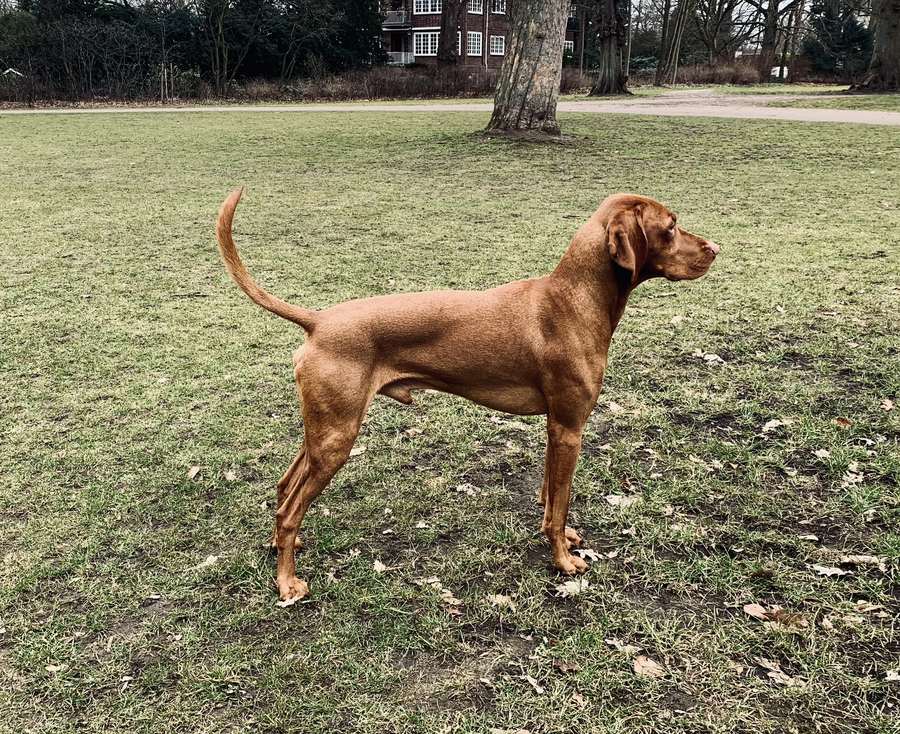
The golden rust Hungarian Pointer: a lean, devoted sporting dog in the AKC Sporting Group, recognized by the AKC in 1960, and so famously attached to its people that owners call the breed the Velcro dog. The AKC puts the breed at 21 to 24 inches and 44 to 60 pounds. How long a Vizsla lives depends on how you count it, and this guide keeps the two published methods separate: the AKC lists life expectancy at 12 to 14 years, and a large UK study of 584,734 dogs put Vizsla life expectancy at 13.5 years. This is a genuinely robust, athletic breed, and its honest planning list is headed by cancer, then an inherited epilepsy with an unusual pattern, a muscle disease almost no other breed gets, an eye drainage risk, and hips, plus the breeder tests that check what can be checked.
Enroll as a puppy, before the first seizure, lump, limp, eye, or thyroid note exists. In this breed the conditions that cost real money are inherited or early noted, and a seizure log, a lump aspirate, or a thyroid panel recorded before enrollment is gone for good.
Cost figures are typical ranges, not quotes or guarantees. Your premium depends on your hungarian pointer's age, your zip code, and the deductible and reimbursement level you choose.
Common health issues in Vizslas
Cancer, including lymphoma and hemangiosarcoma
Risk level: Common / expensive
Cancer comes first in this breed, on the breed's own evidence. In a retrospective owner survey of 2,505 Vizslas born between 1992 and 2008 (Zink et al., 2014, Journal of the American Veterinary Medical Association, funded with Vizsla Club of America Welfare Foundation support), cancer, specifically hemangiosarcoma and lymphoma, was listed as the most common cause of death in the breed, and 604 of the 2,505 dogs (24.1%) had one or more cancers, with mast cell cancer, hemangiosarcoma, and lymphoma or lymphosarcoma the leading types. A 2025 UK breed health survey, run by the Hungarian Vizsla Club and the Hungarian Vizsla Society, found 12.5% of Vizslas in that survey affected by cancer at some point in their lives, a survey share, printed as one. And in the Swiss Canine Cancer Registry, which recorded 54,986 tumors from 2008 to 2020, the Magyar Vizsla recorded the second highest overall tumor incidence rate of the breeds analyzed, at 3,154 per 100,000 dog years at risk, a registry incidence rate, not a lifetime risk. The same 2014 survey found that dogs spayed or neutered at any age group studied had significantly increased odds of several cancers compared with sexually intact dogs, and the younger the age at surgery, the earlier the mean age at diagnosis. That is an association inside one retrospective owner survey; it cannot prove cause, and this page never advises against spaying or neutering. Timing is a conversation for you and your own vet, who knows your individual dog. The planning point is simpler: cancer care is the scenario the annual limit exists for, because diagnosis and treatment decisions arrive fast and run into the thousands, and coverage only helps if it was in place before the first lump was noted.
Epilepsy (idiopathic epilepsy)
Risk level: Common / expensive
Epilepsy is this breed's best studied inherited condition, and it has an unusual shape here. In a US family study of 29 Vizslas diagnosed with idiopathic epilepsy alongside 114 unaffected siblings and parents (Patterson et al., 2003), the inheritance pattern fitted a simple autosomal recessive trait, with no sex predilection. The seizure types in that cohort, as tabulated by the International Veterinary Epilepsy Task Force review, were 62% focal seizures, 17% focal seizures evolving into generalized seizures, and 21% generalized seizures: almost 80% showed signs of focal onset, which is the breed's distinctive feature. A Vizsla seizure may start as a partial, aware looking episode, a strange staring, trembling, or one sided episode, rather than a full body convulsion, and owners should know that an episode like that still counts, still deserves a vet visit, and is worth filming if it is safe to do so. The Kennel Club's 2021 Breed Health and Conservation Plan lists epilepsy among the breed's principal health concerns. No trustworthy population prevalence exists, so this page prints none. Care is lifelong and mostly manageable: daily anti seizure medication, monitoring bloodwork, and a plan for cluster seizures, started with your vet and adjusted over the dog's life.
Vizsla inflammatory polymyopathy (muscle disease)
Risk level: Common
Almost no other breed gets this one. Vizsla inflammatory polymyopathy is a breed specific muscle disease, first characterized in the UK and reported in US dogs by Haley et al. (2011): an immune mediated inflammation that wastes the chewing muscles and attacks the swallowing muscles, so the earliest signs are trouble swallowing, drooling, regurgitation, and a head that slowly loses the muscle on top of it. In a Vizsla Club of America Welfare Foundation funded survey reported in the same paper, 16 of 2,505 Vizslas (0.64%) were diagnosed with myositis, a share of an owner survey population, printed with that label. In a referral case series of 77 Hungarian Vizslas with confirmed or probable disease (Tauro et al., 2015), the mean age of onset was 2.4 years, and the dogs responded to immunosuppressive treatment, which supports an immune mediated cause; a 2013 genetics study (Massey et al.) found an immune system haplotype associated with risk, though there is no routine DNA test for it. A referral case series is a sicker than average population, so the lesson is the signs, not a forecast: a young adult Vizsla who starts drooling, struggling to swallow, regurgitating, or losing the muscles on top of the head needs a prompt vet visit, because early treatment is the difference the studies describe. Diagnosis is specialist work, usually a muscle biopsy after other causes are excluded, and costs stay in that specialist range rather than in any published average.
Eye disease: glaucoma, entropion, and reported retinal atrophy
Risk level: Common
Glaucoma is the headline eye risk, and it hides inside a structure most owners never hear about. The Hungarian Vizsla is on the BVA and Kennel Club list of breeds predisposed to primary glaucoma, and the usual cause in this breed is pectinate ligament abnormality, an inherited defect of the eye's drainage angle, graded 0 to 3 by a separate exam called gonioscopy. In a UK gonioscopy study (Pearl et al.), 16 of 112 screened Hungarian Vizslas (14.3%) were moderately or severely affected by pectinate ligament dysplasia, a share of a screened sample with an abnormal drainage angle, not a share who will develop glaucoma; not every severely affected dog does. Grade 2 or above is generally discounted for breeding, which makes both parents' gonioscopy results a real breeder question alongside the annual eye exam. Why it matters: primary glaucoma blinds fast, and a red, painful, cloudy eye in a Vizsla is a same day emergency, not a wait and see. Entropion, where the lids roll inward and rub the eye, and corneal dystrophy are also listed for this breed in the University of Prince Edward Island's Canine Inherited Disorders Database, and the annual eye examination catches both. Progressive retinal atrophy has been reported in the breed, one more reason that annual exam matters; it is not presented here as a common condition, because the verified record does not support that.
Hip dysplasia
Risk level: Common
Hip dysplasia is a real, screened risk in this athletic breed, with a modest verified footprint. The Vizsla Club of America requires a hip evaluation, by OFA or PennHIP at 24 months or older, for a CHIC number, and the British Veterinary Association lists the Hungarian Vizsla among the breeds at risk; in the BVA and Kennel Club scoring scheme, the breed mean score was a total of 11 (2021 figure), with breeders advised to breed only from dogs at or below that mean. An older registry table, covering OFA hip evaluations from January 1974 to January 1996, recorded 8.2% of 4,722 submitted Vizsla evaluations as dysplastic; that is a share of voluntarily submitted radiographs in a historical window, not a current figure and not a lifetime risk, and no verified modern prevalence exists. The buyer question is the parents: ask for both parents' OFA or PennHIP results. When a hip is badly affected, surgery is the expensive end of the story: total hip replacement averaged $7,064 in a 2024 survey of 14 US hospitals (range $4,500 to $12,000), and femoral head and neck excision averaged $3,347 (range $1,800 to $5,700), printed here as general dog surgery survey pricing, not Vizsla specific figures.
Breeder questions: thyroid, skin, and the full CHIC panel
Risk level: Less common
Three quieter threads belong in a breeder conversation. Thyroid first: the breed club requires an autoimmune thyroiditis evaluation through OFA, repeated every other year, for a CHIC number, which is the club's own statement that thyroid disease is a live concern in this breed. In a 2025 OFA database study of dogs evaluated two or more times, roughly 1 in 5 of the 153 repeatedly tested Vizslas carried some thyroid autoantibody finding or an equivocal result across repeat testing, while outright autoimmune thyroiditis classifications were rare in that group; that describes repeatedly tested, mostly breeding dogs in a registry, not a pet population rate. The owner facing shape of the condition is kind: weight gain, lethargy, and a thinning coat or tail, treated with daily thyroid hormone and monitoring bloodwork for life. Skin second: sebaceous adenitis, an immune mediated disease that destroys the oil glands in the skin, is a verified predisposition in this breed (Merck Veterinary Manual; Marsella, 2023), showing as scaling, flaking, and patchy hair loss, and in a described Vizsla case series it began with ear and ear flap lesions; diagnosis is by skin biopsy, and care is long term management, controllable but not curable, with no verified prevalence to print. And the testing point that ties it together: the full required CHIC panel for this breed is hips at 24 months or older, thyroid every other year, and an eye examination by a board certified ophthalmologist every year, with elbow, cardiac, and dwarfism (Skeletal Dysplasia 3) DNA tests on the recommended list. A CHIC number only means the tests were done and the results are public; a dog does not have to pass any of them to earn it, so check both parents' actual results in the OFA database before you fall for a puppy.
What does pet insurance cost for a Vizsla?
Start from the $62.44/month national dog average (NAPHIA, 2024 data) as an estimate only; Vizslas are a medium, athletic, long lived sporting breed (21 to 24 inches and 44 to 60 pounds per the AKC), so quotes often sit near that average, and there is no trustworthy breed-specific price to quote here. The value of a policy concentrates in cancer diagnosis and treatment in the middle and senior years, a possible lifelong epilepsy program starting in young adulthood, specialist diagnosis and long term immune suppression if the breed's muscle disease appears, an eye emergency that cannot wait, and one possible joint surgery. The studied 13.5 year lifespan cuts both ways: more healthy years together, and more premium years and senior care years than most sporting breeds. The single most useful buyer action this page can teach is asking for both parents' CHIC results, hips, thyroid, and a current annual eye exam, and then checking the actual results in the OFA database.
For context, the national average premium for dogs is roughly $62/month - but breed, age, and location move that number a lot. Estimate your premium with our cost calculator, or see the bigger picture in our lifetime cost projector, which compares a common emergency bill with and without coverage.
Two continental pointing breeds, one shared planning list. Our German Shorthaired Pointer insurance guide covers the Vizsla's closest relative among the pointing breeds on this site, whose joint, eye, and bloat profile rewards the same early planning. Each breed's figures stay on its own page.
What to look for in a policy for a Vizsla
- Enroll as a puppy, before the first seizure, lump, limp, eye, or thyroid note exists. In this breed the conditions that cost real money are inherited or early noted, and a seizure log, a lump aspirate, or a thyroid panel recorded before enrollment is gone for good.
- Confirm that hereditary conditions are covered, because epilepsy, hips, thyroid disease, and eye disease are this breed's inherited core.
- Confirm that cancer diagnosis and treatment, including chemotherapy, are covered, and choose a high or unlimited annual limit, because cancer is this breed's documented leading cause of death and its bills arrive fast.
- Ask for both parents' CHIC results (OFA or PennHIP hips at 24 months or older, a current OFA thyroid evaluation, and a current annual eye exam), and check the actual results in the OFA database, because a CHIC number alone is not a pass.
- Keep the deductible at a level you can pay on a hard day without hesitation - the policy only protects your dog if you can afford to use it.
Compare insurers for your hungarian pointer
Typical plan options from major insurers:
| Insurer | Reimbursement | Annual limit | Waiting periods | Standout feature | Quote |
|---|---|---|---|---|---|
| Spot | 70%, 80% or 90% | $2,500 - unlimited | 14 days (accident & illness) | Preventive-care add-on available. | Get a quote |
| Trupanion | 90% | Unlimited payouts (no annual cap) | 5 days (injury) / 30 days (illness) | Per-condition lifetime deductible; direct vet payment option. | Get a quote |
| Embrace | 70%, 80% or 90% | $5,000 - $30,000 | No wait (accident) / 14 days (illness) / 6 mo (orthopedic, varies by state) | Deductible shrinks $50 each claim-free year. | Get a quote |
| Pets Best | 70%, 80% or 90% | $5,000 or unlimited | 3 days (accident) / 14 days (illness) / 6 mo (cruciate) | Wellness add-on; short accident waiting period. | Get a quote |
| Lemonade | 70%, 80% or 90% | $5,000 - $100,000 | No wait (accident, most states) / 14 days (illness) / 30 days (orthopedic) / 6 mo (cruciate) | Preventive packages; not offered in every state. | Get a quote |
| ASPCA Pet Health Insurance | 70%, 80% or 90% | Multiple annual-limit options | 14 days (accident & illness) | Preventive-care add-on available. | Get a quote |
| Figo | 70%, 80%, 90% or 100% | Up to unlimited annual max | 1 day (accident) / 14 days (illness) / 6 mo (orthopedic) | One of the few with a 100% reimbursement option. | Get a quote |
| Fetch | 70%, 80% or 90% | $5,000 - unlimited | No wait (accident) / 15 days (illness) / 6 mo (orthopedic) | Covers sick-visit exam fees. | Get a quote |
Plan options shown are typical ranges widely published by each insurer; details change and vary by state. Always confirm current terms on the insurer's website before enrolling. Quote buttons link directly to each insurer's website. We don't earn a commission on these links yet.
Other breed guides
- French Bulldog
- Labrador Retriever
- Golden Retriever
- German Shepherd
- Goldendoodle
- Dachshund
- Rottweiler
- Bulldog
- Cavalier King Charles Spaniel
- Shih Tzu
- Boxer
- Australian Shepherd
- German Shorthaired Pointer
- Pembroke Welsh Corgi
- Bernese Mountain Dog
- Border Collie
- Miniature Schnauzer
- Cocker Spaniel
- Yorkshire Terrier
- Great Dane
- Chihuahua
- Pug
- Havanese
- Boston Terrier
- Doberman Pinscher
- Australian Cattle Dog
- Shetland Sheepdog
- English Springer Spaniel
- Belgian Malinois
- Rhodesian Ridgeback
- Bichon Frise
- Siberian Husky
- Cane Corso
- Dalmatian
- Chow Chow
- Akita
- Alaskan Malamute
Frequently asked questions
Is pet insurance worth it for a Vizsla?
For most Vizsla owners, yes - this is a breed where one major surgery can cost more than years of premiums. The math favors insurance most when the breed's common conditions are expensive, which is the case here.
When should I insure my Vizsla?
As early as possible - ideally as a puppy. Conditions diagnosed before enrollment are excluded as pre-existing, and this breed's predispositions mean waiting is the expensive mistake.
What is the best pet insurance for Vizslas?
There is no single best insurer for every dog - the right pick depends on your budget, your dog's age, and which conditions worry you most. Compare annual limits, orthopedic waiting periods, and reimbursement rates across the table above, then run real quotes. (BreedCover may earn a commission if you buy through our links.)