Last updated: November 2026
Pet insurance for Siberian Huskies
The Siberian Husky is the joyful, high-energy sled dog of the AKC Working Group, a medium-sized breed with a thick double coat, recognized by the AKC in 1930. The AKC standard puts males at 21 to 23.5 inches and 45 to 60 pounds, and females at 20 to 22 inches and 35 to 50 pounds. How long a Husky lives depends on how you count it, and this guide keeps the published methods separate: the AKC lists life expectancy at 12 to 14 years, while UK studies that measured actual deaths found 9.5 years on a deaths-only life-table method and a median of 11.9 years in the largest UK dataset. This is a genuinely hardy, long-lived working breed, and its honest planning story starts with the eyes: three inherited eye diseases that can begin young, a lifelong skin condition with no test and no published percent, a thyroid watch, and hips that are a rare bright spot for a dog of this size.
Enroll as a puppy, before the first eye note exists. In a breed whose cataracts can appear before age 2, waiting can turn the most likely claim into an exclusion.
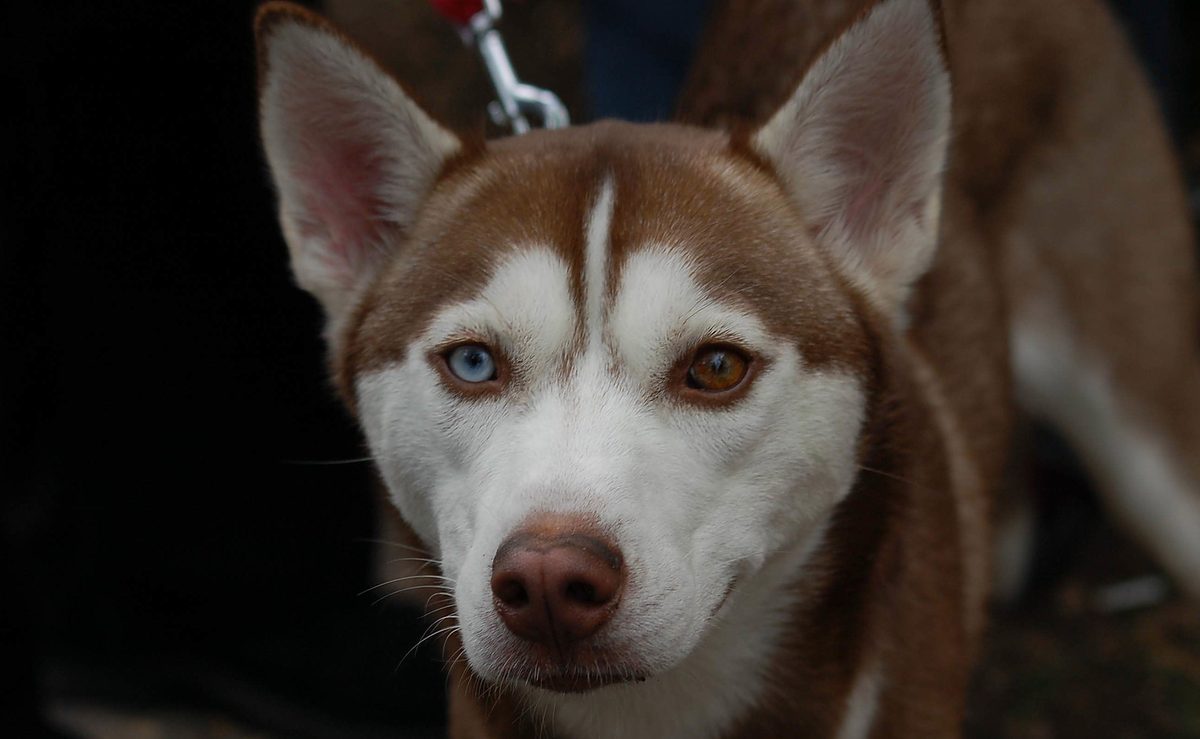
Cost figures are typical ranges, not quotes or guarantees. Your premium depends on your husky's age, your zip code, and the deductible and reimbursement level you choose.
Common health issues in Siberian Huskies
Hereditary cataracts
Risk level: Common / expensive
Eyes are the headline in this breed, and cataracts lead the list. In ophthalmologist screening examinations reported through the Siberian Husky Club of America and analyzed in Uhl et al. 2021 (Veterinary Ophthalmology), 107 of 1,345 screened Huskies, about 8.0%, had inheritable cataracts. That is a screened breeding population, not a share of all Huskies, and the label matters. What makes the Husky story urgent is timing: affected Huskies presented at a mean age of 3.5 years, against 9.5 years in other breeds, and WebMD's breed profile notes that Husky cataracts may develop between 6 and 18 months of age, far younger than a typical age-related cataract, which is why breeding Huskies should have yearly eye screening. If cataracts badly cloud vision, published guides put cataract surgery at roughly $2,700 to $4,500 per eye, with a CareCredit 2025 national average of $3,782 per eye, printed here as guide figures only. A cataract noted at a puppy or young-adult eye exam can become the pre-existing anchor for every later eye claim, which is why this page pushes enrollment before the first eye note exists.
Corneal dystrophy, PRA, and glaucoma
Risk level: Common
Three more eye conditions complete the picture, and each is told at the strength of its evidence. Corneal dystrophy, an inherited clouding of the cornea itself, was found in 44 of the same 1,345 screened Huskies, 3.3%, with the same screened-population label as the cataract figure above; a 2026 case-control study (Chan and Ledbetter, Veterinary Ophthalmology) found the characteristic bilateral, round-to-oval crystalline opacities at a median age of 5.0 years. Many dystrophy cases never seriously impair vision, so the care story is monitoring, not surgery, and no treatment price is printed for it. Progressive retinal atrophy and glaucoma are also named inherited eye risks in this breed in published breed summaries, and both can cause blindness, but no breed-specific prevalence was verified for either, so none is printed. The practical answer to all of it is the same habit: a yearly eye examination by a veterinary ophthalmologist, the single most useful routine a Husky family can keep.
Zinc-responsive dermatosis
Risk level: Common
This skin condition is the breed's quiet signature. In the founding case series (White et al. 2001, Veterinary Dermatology), the Siberian Husky was the predominant breed: a crusting, hair-losing skin disease, worst around the face, in dogs whose bodies cannot absorb zinc properly despite an adequate diet. A peer-reviewed review (Veterinary Clinics of North America, 1999) describes the familial form that affects Siberian Huskies and Alaskan Malamutes, in which lifelong zinc supplementation is usually necessary, alongside a dietary form in growing puppies that diet correction alone may cure. No population prevalence has ever been published for this condition, so no percent is printed here. The insurance question belongs in writing before you rely on a plan for it: ask how the plan classifies a hereditary condition whose name sounds nutritional, because that classification decides whether lifelong care is covered.
Hypothyroidism
Risk level: Less common
The thyroid is this breed's recurring-cost watch. In UK primary-care records (VetCompass, O'Neill et al. 2022, Canine Medicine and Genetics, 905,553 dogs), Siberian Huskies were a significantly predisposed breed for hypothyroidism, with odds 2.53 times those of crossbred dogs, against a baseline of 0.23% of dogs per year. Those odds are printed as odds, never as a Husky percent. A small voluntary registry panel points the same way: 1.1% of 282 submitted Husky thyroid panels were abnormal, mostly compensated autoimmune thyroiditis, printed with its small, voluntary-panel label. The lived version is manageable and lifelong: blood tests to confirm, then daily medication and monitoring bloodwork for life. It is rarely an emergency, but it repeats every year, and the first thyroid note in a dog's record should arrive after a policy is already in place, not before.
Hip dysplasia (the bright spot)
Risk level: Less common
Hips are the honest good news in this breed. In Orthopedic Foundation for Animals data summarized in breed health reporting, about 2% of OFA-tested Huskies were dysplastic, with one dataset of 12,087 dogs at 2.2%, among the lowest rates of any breed. Those data come from a voluntary, breeder-submitted registry population, biased toward normal, and the label travels with the figure. The Siberian Husky Club of America still requires a hip evaluation for breeding dogs, because a low screened figure is a result to maintain, not a reason to skip testing. For a working breed of this size, orthopedic surgery is not where this page's insurance case lives, and that is a genuinely reassuring place for a Husky family to stand.
What does pet insurance cost for a Siberian Husky?
Start from the $62.44/month national dog average (NAPHIA, 2024 data) as an estimate only; there is no trustworthy Siberian Husky specific price to quote here. The honest cost shape of this breed is a medium, long-lived working dog whose value concentrates in eye care that can start young, including one possible cataract surgery, in lifelong skin and thyroid management that repeats year after year, and in the ordinary injuries of a very active dog across a long life, with hips as the rare orthopedic bright spot. Asking for both parents' hip, eye, SHPN1, and SPS1 results, and checking the actual results, is the single most useful buyer action this page can teach, because a CHIC number means the tests were done, not that the dog passed.
For context, the national average premium for dogs is roughly $62/month - but breed, age, and location move that number a lot. Estimate your premium with our cost calculator, or see the bigger picture in our lifetime cost projector, which compares a common emergency bill with and without coverage.
Breeder testing for this breed asks for four things, and two of them are DNA tests most buyers have never heard of. The Siberian Husky Club of America health statement (September 10, 2024) identifies eye examinations, a hip evaluation, and screening for SPS1 and SHPN1. SHPN1 is Siberian Husky Polyneuropathy 1, an inherited nerve disease, and SPS1 is Shaking Puppy Syndrome 1, an inherited condition that shows as shaking in young puppies; both DNA tests are run through the University of Minnesota laboratory. A CHIC number means those tests were done and the results are public, not that the dog passed, so read the actual results on both parents.
Working breeds keep each other's company on this site, and each keeps its own figures. Our Bernese Mountain Dog insurance guide covers a fellow snow-country Working breed whose cancer and joint story is told with its own numbers. Our German Shepherd insurance guide covers a large working breed whose hip story is very different from the low screened rates above. And our Doberman Pinscher insurance guide covers a working breed whose heart, eye, and liver planning rewards the same early start.
Another Working breed joins this one here. Our Akita insurance guide covers a large Japanese guardian whose autoimmune care story and bloat risk reward the same early start, told with its own figures.
Another Arctic sled breed joins this one here. Our Alaskan Malamute insurance guide covers the heavier freight dog bred for steady hauling rather than speed, whose hip screening, inherited nerve condition, and thyroid story are told with its own figures.
What to look for in a policy for a Siberian Husky
- Enroll as a puppy, before the first eye note exists. In a breed whose cataracts can appear before age 2, waiting can turn the most likely claim into an exclusion.
- Confirm that hereditary eye conditions and cataract surgery are covered without a breed exclusion, because the eyes are where this breed's serious costs begin.
- Ask in writing how zinc-responsive dermatosis is classified before relying on a plan for it, and confirm that recurring skin and thyroid conditions stay covered across policy years, because Husky care repeats.
- Ask the breeder for both parents' hip, eye, SHPN1, and SPS1 results, and check the actual results, because a CHIC number alone is not a pass.
- Keep the deductible at a level you can pay on a hard day without hesitation - the policy only protects your dog if you can afford to use it.
Compare insurers for your husky
Typical plan options from major insurers:
| Insurer | Reimbursement | Annual limit | Waiting periods | Standout feature | Quote |
|---|---|---|---|---|---|
| Spot | 70%, 80% or 90% | $2,500 - unlimited | 14 days (accident & illness) | Preventive-care add-on available. | Get a quote |
| Trupanion | 90% | Unlimited payouts (no annual cap) | 5 days (injury) / 30 days (illness) | Per-condition lifetime deductible; direct vet payment option. | Get a quote |
| Embrace | 70%, 80% or 90% | $5,000 - $30,000 | No wait (accident) / 14 days (illness) / 6 mo (orthopedic, varies by state) | Deductible shrinks $50 each claim-free year. | Get a quote |
| Pets Best | 70%, 80% or 90% | $5,000 or unlimited | 3 days (accident) / 14 days (illness) / 6 mo (cruciate) | Wellness add-on; short accident waiting period. | Get a quote |
| Lemonade | 70%, 80% or 90% | $5,000 - $100,000 | No wait (accident, most states) / 14 days (illness) / 30 days (orthopedic) / 6 mo (cruciate) | Preventive packages; not offered in every state. | Get a quote |
| ASPCA Pet Health Insurance | 70%, 80% or 90% | Multiple annual-limit options | 14 days (accident & illness) | Preventive-care add-on available. | Get a quote |
| Figo | 70%, 80%, 90% or 100% | Up to unlimited annual max | 1 day (accident) / 14 days (illness) / 6 mo (orthopedic) | One of the few with a 100% reimbursement option. | Get a quote |
| Fetch | 70%, 80% or 90% | $5,000 - unlimited | No wait (accident) / 15 days (illness) / 6 mo (orthopedic) | Covers sick-visit exam fees. | Get a quote |
Plan options shown are typical ranges widely published by each insurer; details change and vary by state. Always confirm current terms on the insurer's website before enrolling. Quote buttons link directly to each insurer's website. We don't earn a commission on these links yet.
Other breed guides
- French Bulldog
- Labrador Retriever
- Golden Retriever
- German Shepherd
- Goldendoodle
- Dachshund
- Rottweiler
- Bulldog
- Cavalier King Charles Spaniel
- Shih Tzu
- Boxer
- Australian Shepherd
- German Shorthaired Pointer
- Pembroke Welsh Corgi
- Bernese Mountain Dog
- Border Collie
- Miniature Schnauzer
- Cocker Spaniel
- Yorkshire Terrier
- Great Dane
- Chihuahua
- Pug
- Havanese
- Boston Terrier
- Doberman Pinscher
- Vizsla
- Australian Cattle Dog
- Shetland Sheepdog
- English Springer Spaniel
- Belgian Malinois
- Rhodesian Ridgeback
- Bichon Frise
- Cane Corso
- Dalmatian
- Chow Chow
- Akita
- Alaskan Malamute
Frequently asked questions
Is pet insurance worth it for a Siberian Husky?
For most Siberian Husky owners, yes - this is a breed where one major surgery can cost more than years of premiums. The math favors insurance most when the breed's common conditions are expensive, which is the case here.
When should I insure my Siberian Husky?
As early as possible - ideally as a puppy. Conditions diagnosed before enrollment are excluded as pre-existing, and this breed's predispositions mean waiting is the expensive mistake.
What is the best pet insurance for Siberian Huskies?
There is no single best insurer for every dog - the right pick depends on your budget, your dog's age, and which conditions worry you most. Compare annual limits, orthopedic waiting periods, and reimbursement rates across the table above, then run real quotes. (BreedCover may earn a commission if you buy through our links.)