Last updated: November 2026
Pet insurance for Belgian Malinois
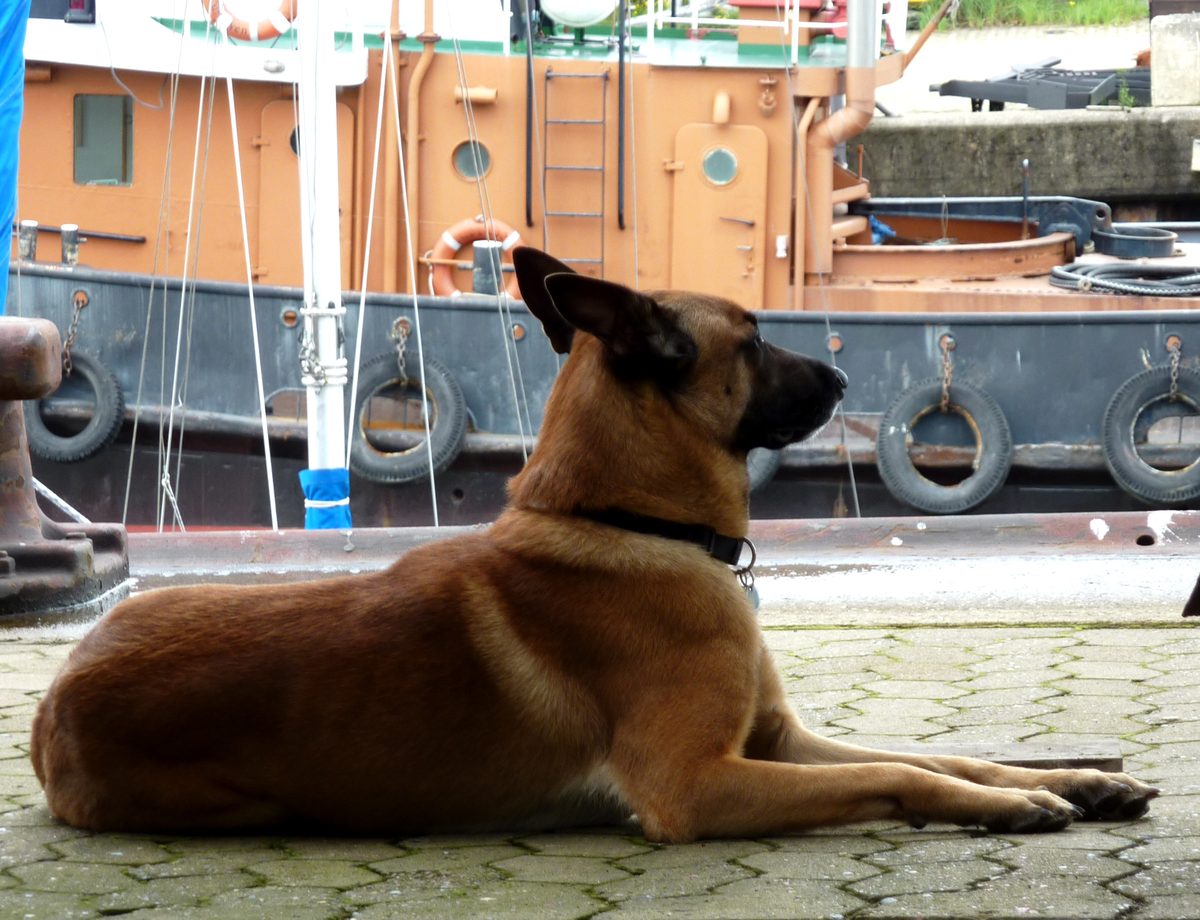
The Belgian Malinois is the brilliant, driven herder of police and military K-9 fame: a world-class worker from Belgium in the AKC Herding Group, recognized by the AKC as a separate breed in 1959 and first imported to the US in 1911. The AKC puts the breed at 24 to 26 inches and 60 to 80 pounds for males, and 22 to 24 inches and 40 to 60 pounds for females. How long a Malinois lives depends on how you count it, and this guide keeps the two published methods separate: the AKC lists life expectancy at 14 to 16 years, and a 2024 UK study of 584,734 dogs put the breed's median lifespan at 12.0 years. This is a genuinely hardy, long-lived athlete, and its honest planning list is eyes first, then elbows, hips that screen better than most large breeds, a family-history conversation about seizures, and two DNA-tested puppy conditions a good breeder settles before a puppy comes home. Loving this breed well also means keeping up with it, and that is part of the planning too.
Enroll as a puppy, before any eye finding, seizure note or injury exists. In a breed this active, the first vet notes arrive early and often, and a finding recorded before enrollment follows the dog for good.
Cost figures are typical ranges, not quotes or guarantees. Your premium depends on your Mal's age, your zip code, and the deductible and reimbursement level you choose.
Common health issues in Belgian Malinois
Eye disease (PRA, cataracts, pannus)
Risk level: Common
Eyes come first in this breed, and the national breed club's own testing list agrees: an ophthalmologist examination is one of only three tests required for a CHIC number in the Malinois. Two independent clinical lists for the breed name the same trio. Progressive retinal atrophy (PRA) is an inherited degeneration of the retina that leads to blindness; early signs such as night blindness generally begin around 3 to 5 years of age. Cataracts are a common cause of blindness in older Malinois, and small incipient cataracts, involving up to 15% of the lens and causing no visual defect, are commonly observed in the breed. Pannus is a UV-influenced disease of the cornea that scars the surface of the eye and can blind if it is left untreated. No verified breed-wide prevalence for PRA or cataracts exists, so this page prints none; the protection is the annual eye exam, and a breeder who can show you both parents' current eye results. Eye care in the senior years of a long life is one of the real costs of loving this breed well.
Elbow dysplasia
Risk level: Common
Elbows grade worse than hips in this breed, and two national schemes tell the story with their labels kept apart. In the British Veterinary Association and Kennel Club elbow scheme (2025 publication), 369 Malinois have been graded since 1999: 327 of them (88.6%) graded 0, and 42 (11.4%) graded 1 to 3. In Swedish screening, elbow dysplasia was found in 4% of X-rayed Swedish Malinois. The schemes grade differently and screen different dogs, so the figures are printed side by side, never merged. Both describe screened, mostly breeding, populations, not a forecast for your puppy. What they agree on is that elbow screening is not a formality here: an elbow evaluation is one of the three CHIC tests for this breed, and both parents' elbow results belong in your breeder conversation.
Hip dysplasia
Risk level: Less common
Hips are the honest good news in this breed, and the numbers deserve their labels. A published registry table drawn from Orthopedic Foundation for Animals data recorded 5.4% of 2,345 evaluated Belgian Malinois as dysplastic, and a more recent summary of OFA data puts the figure at 5.0% of 6,820 evaluated dogs. In Swedish screening, 8% of X-rayed Malinois graded C or worse. Every one of those figures describes a screened population of dogs breeders chose to submit, which understates the general population, and even so the Malinois screens far better than most large working breeds. A hip evaluation is still one of the three CHIC tests for the breed, because low is not zero. When a hip does fail badly enough for surgery, the site-standard cost anchor applies: in a 2024 survey of 14 US hospitals published in the Journal of the American Veterinary Medical Association, total hip replacement in dogs averaged $7,064 (range $4,500 to $12,000), printed here as general dog data, not a Malinois figure.
Epilepsy
Risk level: Less common
Seizures belong on this breed's planning list, with careful labels. In a Swedish breed-club owner survey of 1,346 Belgian Shepherds, 4% of Malinois were reported to have ever had seizures; that is an owner-reported figure, printed as one, not a diagnosed prevalence. Research adds a cautious genetic thread: in a peer-reviewed 2013 study (Lit et al., BMC Genetics), all 5 Malinois with reported seizures in an American sample of 144 dogs carried the same single-copy genotype of a dopamine transporter gene, and the authors state plainly that the findings are preliminary until replicated in a larger sample. No simple screening test rules out seizure disorders before breeding, which is why the breed club encourages asking about epilepsy in a puppy's family history. Care, when it is needed, is usually lifelong: daily medication, monitoring bloodwork, and a plan for emergencies, built with your own vet.
SDCA1 and SDCA2 (puppy brain conditions)
Risk level: Less common
Two devastating puppy brain conditions sit behind two DNA tests, and they are a before-you-buy story, not an adult health cost. Spongy degeneration with cerebellar ataxia type 1 (SDCA1) is caused by a variant in the KCNJ10 gene (Mauri et al., 2017), is inherited as an autosomal recessive trait, and begins at 4 to 13 weeks of age; the estimated mutant allele frequency in the Malinois population is 2.9%. Type 2 (SDCA2) is caused by an insertion in the ATP1B2 gene (Mauri et al., 2017), begins at about 5 to 8 weeks, and affected puppies are usually euthanized by 8 to 12 weeks. A puppy needs two copies of a variant to be affected, and combined SDCA1 and SDCA2 testing is offered by Laboklin, Genomia and AnimaLabs. Serious breeders screen for both, so ask for both parents' DNA results by name. At a 2.9% allele frequency these conditions are uncommon, testable, and largely preventable in tested lines, which is exactly where this breed's DNA story should stay.
What does pet insurance cost for a Belgian Malinois?
Start from the $62.44/month national dog average (NAPHIA, 2024 data) as an estimate only; there is no trustworthy Belgian Malinois specific price to quote here. The honest cost shape of this breed is not a fragile dog with a long disease list. Screened hip and elbow rates are genuinely low, and the value of a policy concentrates in the injuries enthusiasm brings (sport, work and high-drive accidents are this breed's realistic claims pattern), eye care across the senior years of a long life, and a neurology workup in the unlucky minority. The lifespan figures on this page cut both ways: a dog who may live well into the teens brings more premium years, and more senior care years, than most large breeds. Asking for both parents' hip, elbow and eye results, plus SDCA1 and SDCA2 DNA results, and checking the actual results in the OFA database, is the single most useful buyer action this page can teach, because a CHIC number means the tests were done and the results are public, not that the dog passed.
For context, the national average premium for dogs is roughly $62/month - but breed, age, and location move that number a lot. Estimate your premium with our cost calculator, or see the bigger picture in our lifetime cost projector, which compares a common emergency bill with and without coverage.
Three quieter risks belong in every Malinois family's file, printed qualitatively because no breed-specific prevalence was verified for any of them. Bloat (gastric dilatation-volvulus) is a named risk in a deep, narrow-chested breed, and a twisted stomach is a same-night emergency. Hemangiosarcoma, a cancer of blood vessel linings, is listed for the breed, as is hypothyroidism, with its familiar skin, coat and weight signs, and two sources also list a sensitivity to anesthesia worth mentioning to any vet who sedates your dog.
The working contract deserves plain words, with love for the breed. The AKC breed standard calls correct temperament essential to the working character of the Malinois: alert, intelligent, confident, energetic and ready for action, firmly loyal to the people he loves and often indifferent with strangers. A Malinois needs a job, training and company every day, well beyond one daily walk or play session. For the right home that is the joy of the breed; for the wrong one it is a welfare problem, and no insurance policy fixes a bored Malinois.
Working herders are a family on this site, and each keeps its own figures. Our German Shepherd insurance guide covers the Malinois's closest working peer, whose hip story is very different from the low screened rates above. Our Border Collie insurance guide and our Australian Shepherd insurance guide cover two fellow herding breeds whose eye and gene stories reward the same early planning.
What to look for in a policy for a Belgian Malinois
- Enroll as a puppy, before any eye finding, seizure note or injury exists. In a breed this active, the first vet notes arrive early and often, and a finding recorded before enrollment follows the dog for good.
- Confirm that hereditary conditions are covered, because eyes are this breed's inherited core, and its joints and seizure risk sit in the same family.
- Choose an annual limit and accident coverage that respect an athlete's injury pattern, not a lap dog's: the realistic claim in this breed is the enthusiasm injury, the eye emergency, or the senior eye bill.
- Ask the breeder for both parents' hip, elbow and eye results, plus SDCA1 and SDCA2 DNA results, and check the actual results in the OFA database, because a CHIC number alone is not a pass.
- Keep the deductible at a level you can pay on a hard day without hesitation - the policy only protects your dog if you can afford to use it.
Compare insurers for your Mal
Typical plan options from major insurers:
| Insurer | Reimbursement | Annual limit | Waiting periods | Standout feature | Quote |
|---|---|---|---|---|---|
| Spot | 70%, 80% or 90% | $2,500 - unlimited | 14 days (accident & illness) | Preventive-care add-on available. | Get a quote |
| Trupanion | 90% | Unlimited payouts (no annual cap) | 5 days (injury) / 30 days (illness) | Per-condition lifetime deductible; direct vet payment option. | Get a quote |
| Embrace | 70%, 80% or 90% | $5,000 - $30,000 | No wait (accident) / 14 days (illness) / 6 mo (orthopedic, varies by state) | Deductible shrinks $50 each claim-free year. | Get a quote |
| Pets Best | 70%, 80% or 90% | $5,000 or unlimited | 3 days (accident) / 14 days (illness) / 6 mo (cruciate) | Wellness add-on; short accident waiting period. | Get a quote |
| Lemonade | 70%, 80% or 90% | $5,000 - $100,000 | No wait (accident, most states) / 14 days (illness) / 30 days (orthopedic) / 6 mo (cruciate) | Preventive packages; not offered in every state. | Get a quote |
| ASPCA Pet Health Insurance | 70%, 80% or 90% | Multiple annual-limit options | 14 days (accident & illness) | Preventive-care add-on available. | Get a quote |
| Figo | 70%, 80%, 90% or 100% | Up to unlimited annual max | 1 day (accident) / 14 days (illness) / 6 mo (orthopedic) | One of the few with a 100% reimbursement option. | Get a quote |
| Fetch | 70%, 80% or 90% | $5,000 - unlimited | No wait (accident) / 15 days (illness) / 6 mo (orthopedic) | Covers sick-visit exam fees. | Get a quote |
Plan options shown are typical ranges widely published by each insurer; details change and vary by state. Always confirm current terms on the insurer's website before enrolling. Quote buttons link directly to each insurer's website. We don't earn a commission on these links yet.
Other breed guides
- French Bulldog
- Labrador Retriever
- Golden Retriever
- German Shepherd
- Goldendoodle
- Dachshund
- Rottweiler
- Bulldog
- Cavalier King Charles Spaniel
- Shih Tzu
- Boxer
- Australian Shepherd
- German Shorthaired Pointer
- Pembroke Welsh Corgi
- Bernese Mountain Dog
- Border Collie
- Miniature Schnauzer
- Cocker Spaniel
- Yorkshire Terrier
- Great Dane
- Chihuahua
- Pug
- Havanese
- Boston Terrier
- Doberman Pinscher
- Vizsla
- Australian Cattle Dog
- Shetland Sheepdog
- English Springer Spaniel
- Rhodesian Ridgeback
- Bichon Frise
- Siberian Husky
- Cane Corso
- Dalmatian
- Chow Chow
- Akita
- Alaskan Malamute
Frequently asked questions
Is pet insurance worth it for a Belgian Malinois?
For most Belgian Malinois owners, yes - this is a breed where one major surgery can cost more than years of premiums. The math favors insurance most when the breed's common conditions are expensive, which is the case here.
When should I insure my Belgian Malinois?
As early as possible - ideally as a puppy. Conditions diagnosed before enrollment are excluded as pre-existing, and this breed's predispositions mean waiting is the expensive mistake.
What is the best pet insurance for Belgian Malinois?
There is no single best insurer for every dog - the right pick depends on your budget, your dog's age, and which conditions worry you most. Compare annual limits, orthopedic waiting periods, and reimbursement rates across the table above, then run real quotes. (BreedCover may earn a commission if you buy through our links.)