Last updated: November 2026
Pet insurance for Alaskan Malamutes
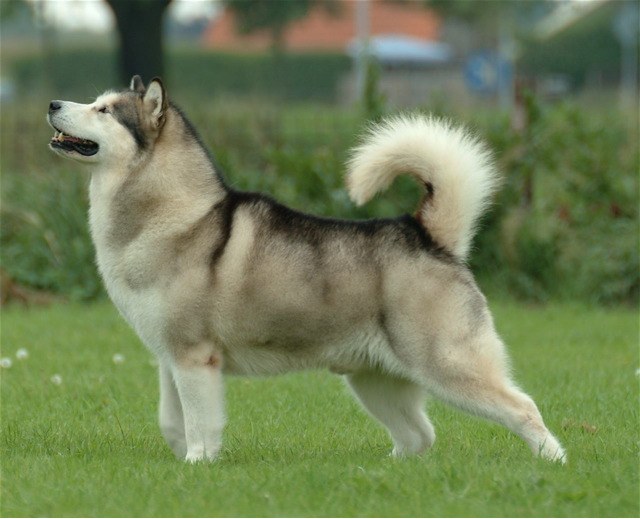
The Alaskan Malamute is the powerful Arctic freight dog of the AKC Working Group, a heavily boned sled dog bred to haul heavy loads at a steady pace, named for the Mahlemiut people of northwestern Alaska and recognized by the AKC in 1935. The AKC standard gives desirable sizes of 25 inches and 85 pounds for males, and 23 inches and 75 pounds for females, and those figures are ideals, not a tight range every Malamute fits, because the standard itself notes a natural range in size. How long a Malamute lives depends on how you count it, and this guide keeps the published methods separate: the AKC lists life expectancy at 10 to 14 years, while UK records measured a median lifespan of 11.3 years across 1,980 Malamutes in the study population. This is a loyal, dignified dog whose strength is the thing families love most, and that strength rides on hips that deserve screening respect, on two inherited conditions that thoughtful breeding can now test for or track before a puppy is born, and on eyes and a thyroid that reward a family who watches closely and enrolls early.
Enroll as a puppy, before any young-dog finding is recorded. In a breed where a nerve condition and a daylight-vision condition both declare themselves in the first two years, a clean early record is what keeps those futures covered.
Cost figures are typical ranges, not quotes or guarantees. Your premium depends on your malamute's age, your zip code, and the deductible and reimbursement level you choose.
Common health issues in Alaskan Malamutes
Hip dysplasia
Risk level: Common / expensive
Hips are the headline joint risk in this breed, and the figure is told here with its label attached every time. In the Orthopedic Foundation for Animals hip registry breed statistics, 11.7% of 16,160 Alaskan Malamute hip evaluations were rated dysplastic, with 87.2% rated normal. Those evaluations are voluntarily submitted, predominantly by owners of breeding stock who chose to screen, so 11.7% is a screened-population share, not the rate in all Malamutes, and the true breed rate is plausibly higher. A second system in a second country points the same way without converting measures: the UK BVA and Kennel Club hip scheme recorded 918 Malamutes scored in the last 15 years with a median hip score of 9, and a median score is not a percent and is never printed as one. Elbows are a watch item in the same registry data, at 4.1% abnormal across 2,068 evaluations, with the same voluntary label. The care story a family can act on is plain: both parents' hip scores checked before a puppy is chosen, lean weight for life, and controlled exercise while a puppy grows. No verified surgery price was found for this breed in the research behind this page, so joint care is described honestly in shape rather than with a borrowed number: years of pain management for many dogs, and a large-dog orthopedic bill in the worst hips.
Inherited polyneuropathy (AMPN)
Risk level: Common / expensive
Inherited polyneuropathy is the breed-specific nerve disease in this file, and it is the clearest breeder-paperwork ask on this page after hips. Alaskan Malamute polyneuropathy is an inherited neuromuscular defect caused by a mutation in the NDRG1 gene, inherited as an autosomal recessive, as the UC Davis Veterinary Genetics Laboratory test page sets out. Signs include exercise intolerance, a change in bark, noisy breathing, muscle atrophy, and progressive gait abnormalities of the hind legs, and the University of Minnesota Canine Genetics Lab puts the usual detection window at 3 to 19 months of age, with dogs carrying two copies of the mutation typically developing neuropathy before they reach 2 years of age. A DNA test distinguishes clear, carrier, and affected dogs: carriers are unaffected themselves and pass the variant to about half of their puppies, so carrier-to-clear pairings are the responsible pattern. In OFA DNA submissions for the breed, 489 dogs were tested with 98.4% clear, 1.6% carriers, and 0% affected, printed here only with its label: a small, voluntarily submitted breeder population, never a breed rate. There is no cure and care is supportive, which is exactly why testing before breeding and enrollment before signs appear in a young dog carry this story.
Hypothyroidism
Risk level: Common
The thyroid is this breed's lifelong monitoring story, and its headline is an odds ratio, never a simple breed percent. In the VetCompass hypothyroidism study of UK primary care, covering 905,553 dogs under care in 2016 with 2,105 hypothyroidism cases and an overall annual prevalence of 0.23%, the Alaskan Malamute had an odds ratio of 9.71 (95% CI 6.11 to 15.42) for a hypothyroidism diagnosis compared with crossbred dogs, among the highest of any breed. In plain terms, a Malamute in UK records was about ten times as likely as a crossbred dog to carry this diagnosis. A small screened count points the same way with its caution attached: the OFA thyroid registry for the breed records 373 evaluations with 86.6% normal, autoimmune thyroiditis, compensative autoimmune thyroiditis, and idiopathic hypothyroidism together making up 4.6%, and 8.8% equivocal, and the breed club health reporting itself cautions that the tested count is low and likely skewed by owners testing dogs with symptoms. Blood tests confirm the diagnosis, and then care is daily medication and monitoring for life, usually starting in middle age, with weight gain, lethargy, and coat change as the signs a family should act on early.
Hereditary cataracts and eye disease
Risk level: Common
Eyes need a yearly look in this breed, in two parts, and the first part is hereditary cataracts. A 2025 study in PLoS ONE of cataracts in Northern breeds found that primary hereditary cataract is common in Northern breeds including the Siberian Husky, Alaskan Malamute, and Samoyed, typically presenting as a bilateral posterior polar subcapsular cataract, with development in related Northern breeds usually beginning around 9 months to 2 years of age. The same study carries an honesty point this page keeps: variants in the CPT1A gene were associated with the condition in several Northern breeds, but in the Alaskan Malamute the variant is very common in unaffected dogs too, so it is not a predictive test for this breed, and no family should pay for it as one. The wider screening picture comes with its full label or not at all: the OFA eye registry for the breed records 2,910 eye examinations with 8.8% abnormal, and that figure covers all eye abnormalities recorded on screening exams in a voluntarily submitted population, so it is not a cataract rate and never prints as one. The practical ask is a current eye examination on both parents and cataract history asked about directly.
Day blindness (cone degeneration)
Risk level: Less common
Day blindness is the second eye story, rarer than cataracts and stranger to live with. In cone degeneration, loss of cone function causes day blindness and decreased visual acuity, with signs appearing between 8 and 12 weeks of age when retinal development completes, as the UC Davis Veterinary Genetics Laboratory test page sets out. The Malamute form is a deletion of a genomic segment of about 400,000 bases that includes the CNGB3 gene, inherited as an autosomal recessive, and a DNA test distinguishes clear, carrier, and affected dogs. Night and dim-light vision, which runs on rods, is not affected, so an affected puppy can move confidently at dusk and still struggle in bright light. The Alaskan Malamute Club of America account adds the history: the condition, also called hemeralopia, was first identified in the breed in the early 1960s, test breedings established it as autosomal recessive, it remains relatively rare, and cases still appear. A puppy squinting and bumping into things in bright light while moving confidently at dusk is a vet visit now, not a wait and see.
Zinc-responsive dermatosis
Risk level: Less common
This skin condition is tied to how this breed absorbs zinc, and understanding that protects families from a common detour. In Siberian Huskies and Alaskan Malamutes the problem is usually not the food: the body does not absorb zinc well from the gut, as VCA Hospitals guidance on zinc-responsive dermatosis sets out, and standard veterinary references describe the same Syndrome I form in dogs eating a well-balanced diet, reported most commonly in these two Northern breeds. The signs are crusting, redness, and hair loss around the eyes and mouth, at pressure points, and on the footpads. Skin biopsy is the surest confirmation, because blood zinc levels can be low in healthy dogs too. Treatment is veterinary-directed oral zinc, most cases respond within 4 to 6 weeks, and Syndrome I treatment is usually lifelong. No prevalence percent was verified for this condition, so none is printed. Crusting around the eyes and muzzle in a Malamute is not automatically a food allergy, an elimination diet will not fix an absorption problem, and zinc is never started at home without a vet, because too much zinc is its own harm.
What does pet insurance cost for an Alaskan Malamute?
Start from the $62.44/month national dog average (NAPHIA, 2024 data) as an estimate only; there is no trustworthy Alaskan Malamute specific price to quote here. A large, strong breed like this will usually be quoted at or above that average, and the honest cost shape concentrates in joint care across a measured 11.3 year median life, in lifelong thyroid management for the dogs who need it, and in early enrollment that precedes the young-dog nerve and eye conditions above ever being written into a record. Asking for both parents' hip scores, a current eye exam, and both parents' polyneuropathy DNA results, and checking the actual results, is the single most useful buyer action this page can teach, because a CHIC number means the tests were done, not that the dog passed.
For context, the national average premium for dogs is roughly $62/month - but breed, age, and location move that number a lot. Estimate your premium with our cost calculator, or see the bigger picture in our lifetime cost projector, which compares a common emergency bill with and without coverage.
Breeder testing for this breed has a clear required set, verified this run against the breed club statement. The Alaskan Malamute Club of America lists its required health tests as a hip evaluation, an eye examination, and the Alaskan Malamute polyneuropathy DNA test, and breeder guidance describing the club's present recommended minimum adds thyroid and elbow evaluations as recommended additions. So the papers to ask for are both parents' hip scores, a current eye exam, and both parents' polyneuropathy DNA results, plus the pedigree conversation in the next paragraph. A CHIC number means those tests were done and the results are public, not that the dog passed, so read the actual results on both parents.
One pedigree conversation deserves its own paragraph, because it comes with a lock this page will not loosen. Chondrodysplasia, the inherited dwarfism of this breed, is a genetically determined skeletal disorder transmitted as a simple autosomal recessive trait, with affected dogs showing excessively shortened front limbs with bowing and deformity, and an associated inherited blood condition in which abnormal red cells called stomatocytes appear. The club established that inheritance by test breedings that produced 114 puppies, affected puppies can be identified by radiographs of the carpal joint between 5 and 12 weeks of age, and the condition is now rare. The causal gene has not been identified, so there is no DNA test for chondrodysplasia in this breed, whatever breeder marketing says: the club manages it through pedigree analysis and a certification approach under which a certificate states a calculated carrier probability, not a clear DNA result. A breeder offering a chondrodysplasia DNA certificate for a Malamute is offering a test that does not exist for this condition, and a good breeder will welcome the direct question instead: how do you track chondrodysplasia in this pedigree, and what do you know of both parents' family history for it?
The coat, the cold, and the heat deserve a short honest paragraph of their own. A Malamute carries a thick, coarse double coat with a dense, woolly, oily undercoat that can be as thick as two inches, built for Arctic freight work, and that coat protects in winter and burdens in summer heat. Exercise shifts to the cool hours on warm days, shade and water and rest are care duties rather than extras, coats are brushed out through the heavy seasonal shedding rather than shaved down, and heat is treated with the same seriousness as any condition on this page.
Working breeds keep each other's company on this site, and each keeps its own figures. Our Siberian Husky insurance guide covers the closest peer here, the lighter Arctic sled dog built for speed where the Malamute is built for freight, whose eye-first planning story is told with its own figures. Our German Shepherd insurance guide covers a large working breed whose hip story is told with its own registry figures. Our Rottweiler insurance guide covers a fellow Working guardian whose joint and cancer planning rewards the same early start. And our Akita insurance guide covers a large northern guardian whose lifelong autoimmune care story rewards the same vigilance.
What to look for in a policy for an Alaskan Malamute
- Enroll as a puppy, before any young-dog finding is recorded. In a breed where a nerve condition and a daylight-vision condition both declare themselves in the first two years, a clean early record is what keeps those futures covered.
- Confirm that hereditary conditions are covered, including nerve, eye, and joint conditions, and ask how congenital conditions are treated, because the breed-specific risks on this page are inherited ones.
- Confirm that joint conditions are covered, and ask about orthopedic waiting periods, because hips are this breed's headline screening concern.
- Ask how chronic skin and thyroid conditions are handled across policy years, because both are managed for life once diagnosed, not for a single visit.
- Ask the breeder for both parents' hip scores, a current eye exam, and both parents' polyneuropathy DNA results, and ask directly how chondrodysplasia is tracked in the pedigree, because a CHIC number alone is not a pass.
- Keep the deductible at a level you can pay on a hard day without hesitation - the policy only protects your dog if you can afford to use it.
Compare insurers for your malamute
Typical plan options from major insurers:
| Insurer | Reimbursement | Annual limit | Waiting periods | Standout feature | Quote |
|---|---|---|---|---|---|
| Spot | 70%, 80% or 90% | $2,500 - unlimited | 14 days (accident & illness) | Preventive-care add-on available. | Get a quote |
| Trupanion | 90% | Unlimited payouts (no annual cap) | 5 days (injury) / 30 days (illness) | Per-condition lifetime deductible; direct vet payment option. | Get a quote |
| Embrace | 70%, 80% or 90% | $5,000 - $30,000 | No wait (accident) / 14 days (illness) / 6 mo (orthopedic, varies by state) | Deductible shrinks $50 each claim-free year. | Get a quote |
| Pets Best | 70%, 80% or 90% | $5,000 or unlimited | 3 days (accident) / 14 days (illness) / 6 mo (cruciate) | Wellness add-on; short accident waiting period. | Get a quote |
| Lemonade | 70%, 80% or 90% | $5,000 - $100,000 | No wait (accident, most states) / 14 days (illness) / 30 days (orthopedic) / 6 mo (cruciate) | Preventive packages; not offered in every state. | Get a quote |
| ASPCA Pet Health Insurance | 70%, 80% or 90% | Multiple annual-limit options | 14 days (accident & illness) | Preventive-care add-on available. | Get a quote |
| Figo | 70%, 80%, 90% or 100% | Up to unlimited annual max | 1 day (accident) / 14 days (illness) / 6 mo (orthopedic) | One of the few with a 100% reimbursement option. | Get a quote |
| Fetch | 70%, 80% or 90% | $5,000 - unlimited | No wait (accident) / 15 days (illness) / 6 mo (orthopedic) | Covers sick-visit exam fees. | Get a quote |
Plan options shown are typical ranges widely published by each insurer; details change and vary by state. Always confirm current terms on the insurer's website before enrolling. Quote buttons link directly to each insurer's website. We don't earn a commission on these links yet.
Other breed guides
- French Bulldog
- Labrador Retriever
- Golden Retriever
- German Shepherd
- Goldendoodle
- Dachshund
- Rottweiler
- Bulldog
- Cavalier King Charles Spaniel
- Shih Tzu
- Boxer
- Australian Shepherd
- German Shorthaired Pointer
- Pembroke Welsh Corgi
- Bernese Mountain Dog
- Border Collie
- Miniature Schnauzer
- Cocker Spaniel
- Yorkshire Terrier
- Great Dane
- Chihuahua
- Pug
- Havanese
- Boston Terrier
- Doberman Pinscher
- Vizsla
- Australian Cattle Dog
- Shetland Sheepdog
- English Springer Spaniel
- Belgian Malinois
- Rhodesian Ridgeback
- Bichon Frise
- Siberian Husky
- Cane Corso
- Dalmatian
- Chow Chow
- Akita
Frequently asked questions
Is pet insurance worth it for an Alaskan Malamute?
For most Alaskan Malamute owners, yes - this is a breed where one major surgery can cost more than years of premiums. The math favors insurance most when the breed's common conditions are expensive, which is the case here.
When should I insure my Alaskan Malamute?
As early as possible - ideally as a puppy. Conditions diagnosed before enrollment are excluded as pre-existing, and this breed's predispositions mean waiting is the expensive mistake.
What is the best pet insurance for Alaskan Malamutes?
There is no single best insurer for every dog - the right pick depends on your budget, your dog's age, and which conditions worry you most. Compare annual limits, orthopedic waiting periods, and reimbursement rates across the table above, then run real quotes. (BreedCover may earn a commission if you buy through our links.)