Last updated: November 2026
Pet insurance for Pugs
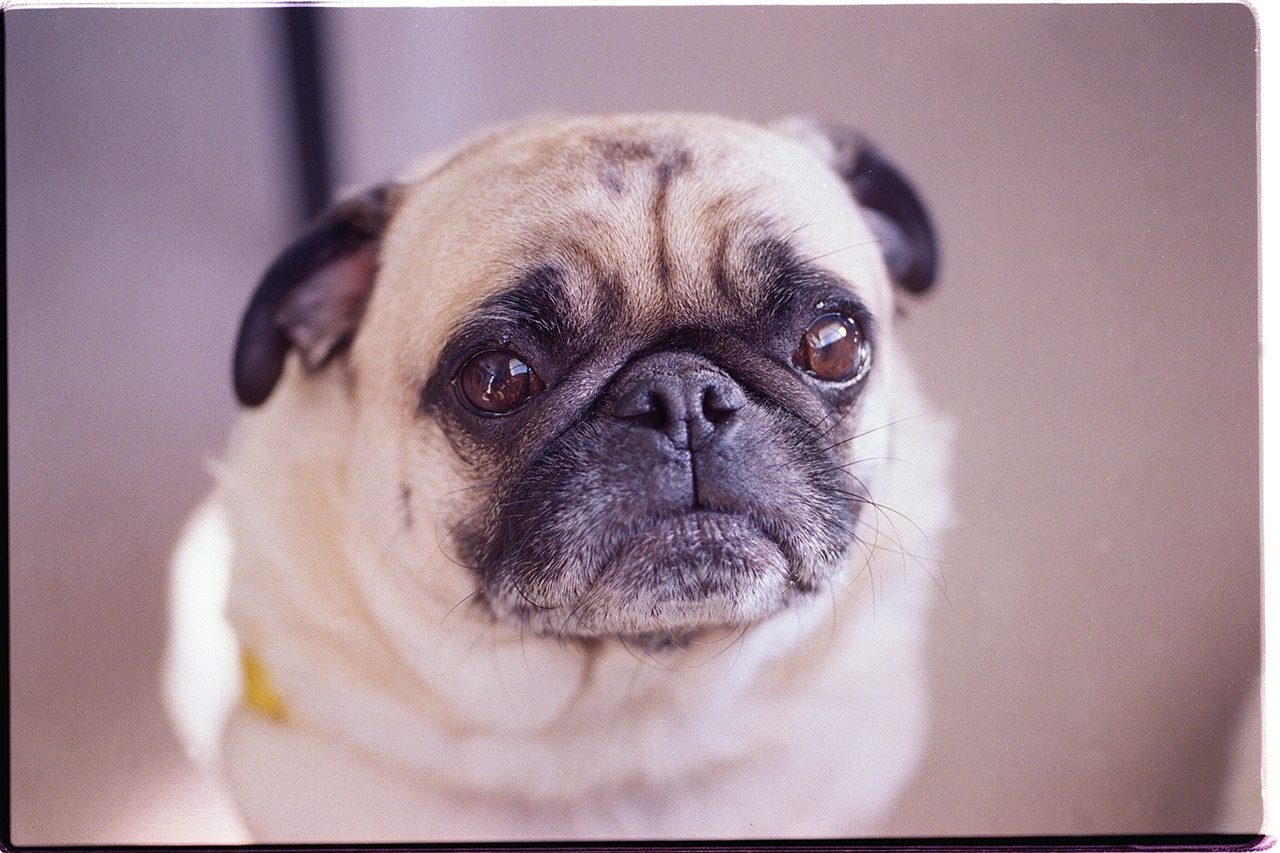
A charming, sturdy, clownish companion who adores their people and wants to be close to them, at 14 to 18 pounds and 10 to 13 inches in the AKC breed standard. How long a Pug lives depends on how you count it, and this guide keeps the three published methods separate, each with its label: the AKC lists life expectancy at 13 to 15 years, UK VetCompass life tables put life expectancy at birth at 7.7 years, from UK dogs that died between 2016 and 2020, and a large UK study of 584,734 dogs put the median lifespan at 11.6 years. Flat-faced breeds sit at the short end of every measured method, and the spread between those numbers is itself part of the honest picture. This is one of the most health-loaded breeds on this site, and the guide covers what that means for care and insurance, kindly and in full.
Enroll as a puppy, before any vet note about breathing, nostrils, eyes, or weight exists. In this breed the first notes can arrive at the first puppy visit, and airway or eye findings recorded before enrollment can be excluded for good.
Cost figures are typical ranges, not quotes or guarantees. Your premium depends on your pug's age, your zip code, and the deductible and reimbursement level you choose.
Common health issues in Pugs
Brachycephalic obstructive airway syndrome (BOAS)
Risk level: Common / expensive
Breathing is this breed's headline risk, and it starts with the shape of the head: narrowed nostrils, an elongated soft palate, and a compressed airway, made harder by heat, exercise, and extra weight. In a Royal Veterinary College VetCompass study of UK primary care records from 2016, comparing random samples of 4,308 Pugs and 21,835 other dogs drawn from 905,544 dogs under care, Pugs had 53.92 times the odds of a BOAS diagnosis and 51.25 times the odds of narrowed nostrils (stenotic nares) compared with all other dogs, and 1.86 times the odds of at least one disorder in the year, with increased odds for 23 of 40 common disorders. Those are odds of a diagnosis recorded in one year, not lifetime risks, and the study's authors concluded that a Pug's health profile is so different from other dogs that the breed can no longer be considered a typical dog. The Respiratory Function Grading Scheme, run by the Kennel Club with the University of Cambridge, grades breathing in Pugs, French Bulldogs, and Bulldogs, so a breeder who can show a parent's breathing grade is giving you real information. When a vet recommends corrective surgery, published US cost guides put full corrective surgery at roughly $1,500 to $5,000, with specialist cases higher; that is guide pricing, not a survey average.
Corneal ulceration and eye care
Risk level: Common / expensive
A Pug's prominent eyes sit in shallow sockets, and ulcers of the cornea are the painful result owners need to act on the same day. In the 2016 VetCompass comparison above, Pugs had 13.01 times the odds of corneal ulceration compared with all other dogs. A separate VetCompass study of corneal ulcerative disease, covering more than 100,000 dogs in England, found Pugs at over 19 times the risk of crossbred dogs; the two studies used different comparison groups, so they are printed as two findings, not one range. A cloudy, red, or squinting eye, or a Pug pawing at their face, is a same-day vet visit, and recurring eye care is a normal budget line in this breed, not a surprise.
Pug dog encephalitis (necrotizing meningoencephalitis, NME)
Risk level: Common
A breed-specific, fatal inflammation of the brain and its membranes, with no cure, that usually appears in young dogs. Research from the UC Davis group links it to a genetic marker region: Pugs with two copies of the high-risk marker have about 12.75 times the lifetime susceptibility of Pugs with one or no copies, yet only about 1 in 7 to 8 of those two-copy dogs ever develops the disease, and about 1.2% of Pugs die of it in the population studies behind the test. A DNA test for the marker exists; it measures susceptibility, not diagnosis, so it is a breeder question, not a verdict on a puppy. In a European study of genetic test results for 5,974 Pugs, the risk variant's frequency was 25.7%, with 7.4% of tested dogs carrying two copies and 36.7% carrying one copy; that is a tested population, mostly breeding dogs, not all Pugs. Ask a breeder for both parents' marker results. There is no treatment cost figure to publish here; the insurance point is that a neurology workup and seizure care in a young dog can arrive early and add up.
Obesity
Risk level: Common
Extra weight is common in this breed, and it is a breathing problem as much as a feeding one, because every extra pound narrows an already tight airway. Obesity was among the 23 disorders with significantly increased odds in the 2022 VetCompass comparison, and in an earlier VetCompass study of UK records from 2013, covering 1,009 Pugs, overweight or obesity was the breed's most commonly recorded disorder, at 13.2% of dogs in that year. The two figures carry different years and methods, so they are printed separately. Keeping a Pug lean is the kindest and cheapest health care on this page, and it makes breathing, joints, and anesthesia all safer.
Skin fold dermatitis
Risk level: Less common
The folds that give a Pug their expression trap moisture and rub, and the skin inside them can become infected and sore. In the 2016 VetCompass comparison, Pugs had 10.98 times the odds of skin fold dermatitis compared with all other dogs. Care is recurring rather than dramatic: gentle fold cleaning, vet visits when a flare-up starts, and medicated care across a lifetime. No trustworthy single cost figure exists for that routine, so this page prints none; budget for it as a regular care line, the way you would for food or grooming.
What does pet insurance cost for a Pug?
Start from the $62.44/month national dog average (NAPHIA, 2024 data) as an estimate only; expect quotes for a Pug to sit above that average, because insurers price by breed and this breed's risks are visible in its anatomy from puppyhood, and there is no trustworthy Pug-specific price to quote here. The value of a policy concentrates in airway surgery in the early years, eye emergencies at any age, a neurology workup in the unlucky minority of young dogs, and years of weight, skin, and breathing management. Because so much of this breed's risk can be written into the record at the very first puppy visit, the pre-existing and hereditary conditions wording matters more here than for almost any other dog on this site.
For context, the national average premium for dogs is roughly $62/month - but breed, age, and location move that number a lot. Estimate your premium with our cost calculator, or see the bigger picture in our lifetime cost projector, which compares a common emergency bill with and without coverage.
A fellow Non-Sporting breed joins this one here. Our Dalmatian insurance guide covers the spotted coach dog whose bladder and hearing story is settled before a puppy comes home, told with its own figures kept separate from the ones above.
Another Non-Sporting breed joins this one here. Our Chow Chow insurance guide covers a lion-maned ancient breed whose eyelid and elbow story rewards the same early start, told with its own figures.
What to look for in a policy for a Pug
- Enroll as a puppy, before any vet note about breathing, nostrils, eyes, or weight exists. In this breed the first notes can arrive at the first puppy visit, and airway or eye findings recorded before enrollment can be excluded for good.
- Confirm that hereditary conditions are covered and that breathing (BOAS) surgery is covered, and ask in writing how congenital airway conditions are treated, because some plans treat the airway a Pug is born with as excluded.
- Confirm that eye emergencies are covered without a breed exclusion, because a corneal ulcer in this breed is a same-day emergency, not a watch and wait.
- Choose an annual limit that could survive airway surgery and a neurology workup landing in the same year.
- Keep the deductible at a level you can pay on a hard day without hesitation - the policy only protects your dog if you can afford to use it.
Compare insurers for your pug
Typical plan options from major insurers:
| Insurer | Reimbursement | Annual limit | Waiting periods | Standout feature | Quote |
|---|---|---|---|---|---|
| Spot | 70%, 80% or 90% | $2,500 - unlimited | 14 days (accident & illness) | Preventive-care add-on available. | Get a quote |
| Trupanion | 90% | Unlimited payouts (no annual cap) | 5 days (injury) / 30 days (illness) | Per-condition lifetime deductible; direct vet payment option. | Get a quote |
| Embrace | 70%, 80% or 90% | $5,000 - $30,000 | No wait (accident) / 14 days (illness) / 6 mo (orthopedic, varies by state) | Deductible shrinks $50 each claim-free year. | Get a quote |
| Pets Best | 70%, 80% or 90% | $5,000 or unlimited | 3 days (accident) / 14 days (illness) / 6 mo (cruciate) | Wellness add-on; short accident waiting period. | Get a quote |
| Lemonade | 70%, 80% or 90% | $5,000 - $100,000 | No wait (accident, most states) / 14 days (illness) / 30 days (orthopedic) / 6 mo (cruciate) | Preventive packages; not offered in every state. | Get a quote |
| ASPCA Pet Health Insurance | 70%, 80% or 90% | Multiple annual-limit options | 14 days (accident & illness) | Preventive-care add-on available. | Get a quote |
| Figo | 70%, 80%, 90% or 100% | Up to unlimited annual max | 1 day (accident) / 14 days (illness) / 6 mo (orthopedic) | One of the few with a 100% reimbursement option. | Get a quote |
| Fetch | 70%, 80% or 90% | $5,000 - unlimited | No wait (accident) / 15 days (illness) / 6 mo (orthopedic) | Covers sick-visit exam fees. | Get a quote |
Plan options shown are typical ranges widely published by each insurer; details change and vary by state. Always confirm current terms on the insurer's website before enrolling. Quote buttons link directly to each insurer's website. We don't earn a commission on these links yet.
Other breed guides
- French Bulldog
- Labrador Retriever
- Golden Retriever
- German Shepherd
- Goldendoodle
- Dachshund
- Rottweiler
- Bulldog
- Cavalier King Charles Spaniel
- Shih Tzu
- Boxer
- Australian Shepherd
- German Shorthaired Pointer
- Pembroke Welsh Corgi
- Bernese Mountain Dog
- Border Collie
- Miniature Schnauzer
- Cocker Spaniel
- Yorkshire Terrier
- Great Dane
- Chihuahua
- Havanese
- Boston Terrier
- Doberman Pinscher
- Vizsla
- Australian Cattle Dog
- Shetland Sheepdog
- English Springer Spaniel
- Belgian Malinois
- Rhodesian Ridgeback
- Bichon Frise
- Siberian Husky
- Cane Corso
- Dalmatian
- Chow Chow
- Akita
- Alaskan Malamute
Frequently asked questions
Is pet insurance worth it for a Pug?
For most Pug owners, yes - this is a breed where one major surgery can cost more than years of premiums. The math favors insurance most when the breed's common conditions are expensive, which is the case here.
When should I insure my Pug?
As early as possible - ideally as a puppy. Conditions diagnosed before enrollment are excluded as pre-existing, and this breed's predispositions mean waiting is the expensive mistake.
What is the best pet insurance for Pugs?
There is no single best insurer for every dog - the right pick depends on your budget, your dog's age, and which conditions worry you most. Compare annual limits, orthopedic waiting periods, and reimbursement rates across the table above, then run real quotes. (BreedCover may earn a commission if you buy through our links.)