Last updated: November 2026
Pet insurance for Ragdolls
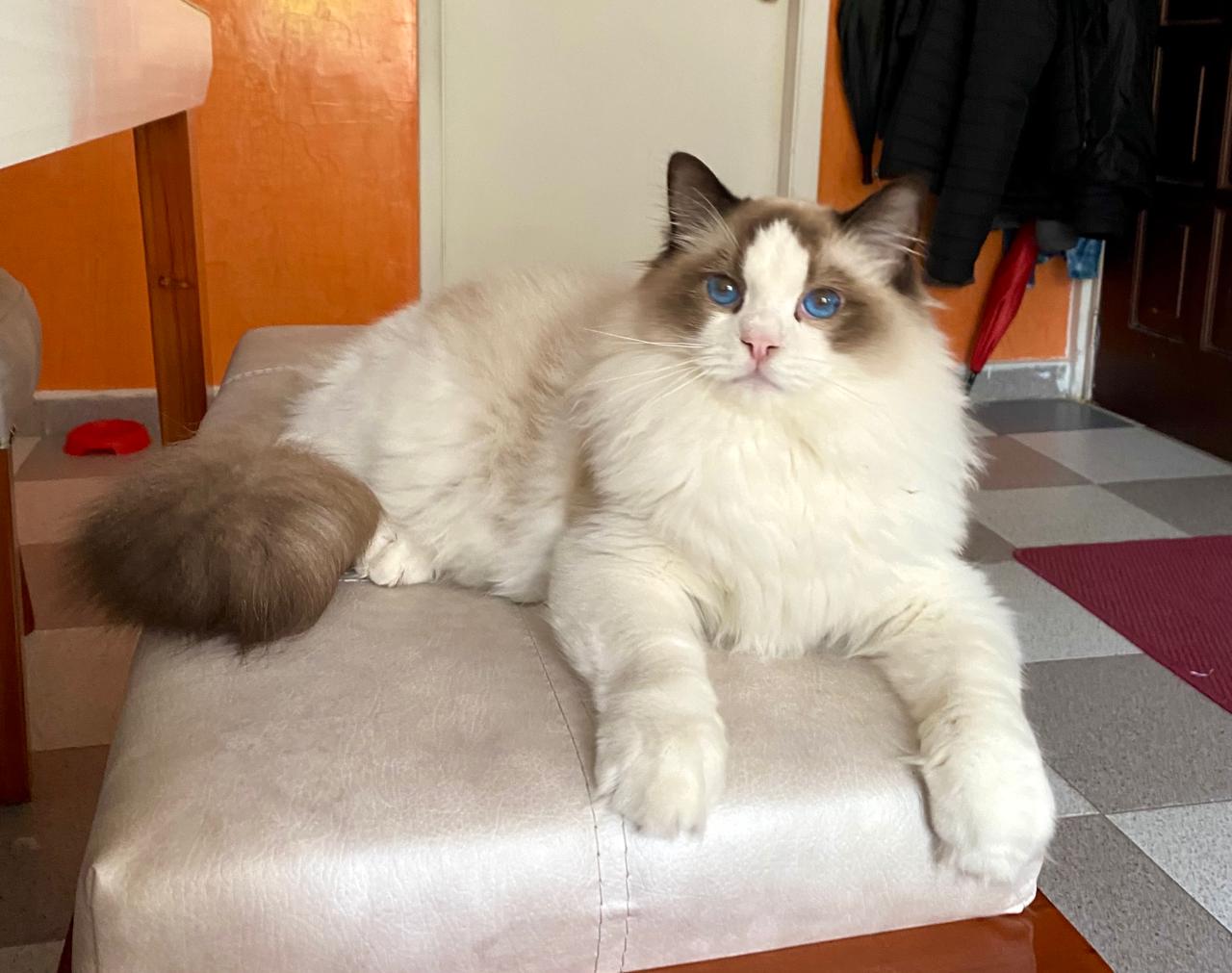
A large, gentle, people-focused cat - males generally 15 to 20 pounds and females 10 to 15 pounds in TICA's breed description - with blue eyes, pointed coloring, and a heart story that is real but nuanced: a known gene, a DNA test, and risk that depends heavily on whether a cat carries one copy of the mutation or two.
Enroll as a kitten, before any heart murmur, echocardiogram finding, or stone episode is in the records.
Cost figures are typical ranges, not quotes or guarantees. Your premium depends on your cat's age, your zip code, and the deductible and reimbursement level you choose.
Common health issues in Ragdolls
Heart disease (hypertrophic cardiomyopathy, HCM)
Risk level: Common / expensive
Ragdolls carry a breed-specific mutation, R820W in the MYBPC3 gene, linked to HCM (UC Davis Veterinary Genetics Laboratory). Copy number is the whole story: cats with two copies are at high risk of severe signs, usually between 1 and 2 years of age, and a greater likelihood of early cardiac death, while cats with one copy are not likely to show signs and may live a normal lifespan. Langford Vets (University of Bristol) reports the prevalence of the R820W mutation in the Ragdoll population is around 13% - that is mutation prevalence, not disease prevalence. A DNA test exists, and screening pairs the test with a heart ultrasound (echocardiogram); a clear DNA result does not rule HCM out, because other, unidentified mutations can also cause it. An initial cardiac workup typically costs about $1,000 to $1,500, with the referral echocardiogram the main component.
Kidney and ureter stones (upper urinary tract uroliths)
Risk level: Common
Ragdolls are one of five breeds at increased risk of upper urinary tract stones in a Royal Veterinary College VetCompass referral study of 11,431 cats assessed with imaging, in which 521 had upper urinary tract uroliths; the other at-risk breeds were British Shorthair, Burmese, Persian, and Tonkinese, and cats aged 4 to 8 years had the highest risk. A separate Canadian Veterinary Urolith Centre study of 21,426 feline urolith submissions also lists Ragdolls among breeds at increased risk. These stones are usually calcium oxalate, which cannot be dissolved by diet or medication, and a blocked kidney or ureter is potentially life-threatening, so straining, pain, or a sudden drop in appetite in this breed is always an emergency.
Polycystic kidney disease (PKD)
Risk level: Less common
Present in the breed's screening conversation, but not a headline Ragdoll risk: a screening study of Ragdolls found PKD prevalence under 3%, and a DNA test exists so breeders can select PKD-negative stock. Worth one calm question for your breeder and your vet, not a reason to worry on its own.
Dental disease
Risk level: Common
Most cats over age 3 have some dental disease. Cleanings with extractions commonly cost $500 to $2,000, and dental care tends to repeat across a long life. Note: dental usually falls under wellness add-ons, not core illness plans.
What does pet insurance cost for a Ragdoll?
Start from the $32.21/month national cat average (NAPHIA, 2024 data) as an estimate only; there is no trustworthy Ragdoll-specific price to quote here. The value of a policy for this breed concentrates in two scenarios: one cardiac workup at about $1,000 to $1,500, roughly 3 years of average premiums, and one urinary emergency.
For context, the national average premium for cats is roughly $32/month - but breed, age, and location move that number a lot. Estimate your premium with our cost calculator, or read the full cat insurance hub for how cat coverage works.
Dental care is a recurring cost for this breed, so it helps to know the numbers early. Our cat teeth cleaning cost guide breaks down the typical $300 to $700 cost of a routine cleaning and what can push a bill higher.
What to look for in a policy for a Ragdoll
- Enroll as a kitten, before any heart murmur, echocardiogram finding, or stone episode is in the records.
- Confirm that hereditary conditions, including HCM, are covered, and whether a vet-recommended heart ultrasound (echocardiogram) is covered too.
- Choose an annual limit sized for a cardiac workup and a urinary emergency landing in the same year.
- Ask how a past urinary condition is treated after a symptom-free period - some insurers restore eligibility for curable conditions, and urinary history matters in this breed.
- Keep the deductible at a level you can pay on a hard day without hesitation - the policy only protects your cat if you can afford to use it.
Compare insurers for your Ragdoll
Typical plan options from major insurers:
| Insurer | Reimbursement | Annual limit | Waiting periods | Standout feature | Quote |
|---|---|---|---|---|---|
| Spot | 70%, 80% or 90% | $2,500 - unlimited | 14 days (accident & illness) | Preventive-care add-on available. | Get a quote |
| Trupanion | 90% | Unlimited payouts (no annual cap) | 5 days (injury) / 30 days (illness) | Per-condition lifetime deductible; direct vet payment option. | Get a quote |
| Embrace | 70%, 80% or 90% | $5,000 - $30,000 | No wait (accident) / 14 days (illness) / 6 mo (orthopedic, varies by state) | Deductible shrinks $50 each claim-free year. | Get a quote |
| Pets Best | 70%, 80% or 90% | $5,000 or unlimited | 3 days (accident) / 14 days (illness) / 6 mo (cruciate) | Wellness add-on; short accident waiting period. | Get a quote |
| Lemonade | 70%, 80% or 90% | $5,000 - $100,000 | No wait (accident, most states) / 14 days (illness) / 30 days (orthopedic) / 6 mo (cruciate) | Preventive packages; not offered in every state. | Get a quote |
| ASPCA Pet Health Insurance | 70%, 80% or 90% | Multiple annual-limit options | 14 days (accident & illness) | Preventive-care add-on available. | Get a quote |
| Figo | 70%, 80%, 90% or 100% | Up to unlimited annual max | 1 day (accident) / 14 days (illness) / 6 mo (orthopedic) | One of the few with a 100% reimbursement option. | Get a quote |
| Fetch | 70%, 80% or 90% | $5,000 - unlimited | No wait (accident) / 15 days (illness) / 6 mo (orthopedic) | Covers sick-visit exam fees. | Get a quote |
Plan options shown are typical ranges widely published by each insurer; details change and vary by state. Always confirm current terms on the insurer's website before enrolling. Quote buttons link directly to each insurer's website. We don't earn a commission on these links yet.
Other cat breed guides
- Maine Coon
- British Shorthair
- Siamese
- Bengal
- Persian
- Sphynx
- Scottish Fold
- Norwegian Forest Cat
- Russian Blue
- Abyssinian
- Devon Rex
- American Shorthair
Frequently asked questions
Is pet insurance worth it for a Ragdoll?
For most Ragdoll owners, yes - this is a breed where screening, treatment for its known conditions, and dental work can add up to far more than years of premiums. The math favors insurance most when a breed's common conditions are expensive or repeat over time, which is the case here.
When should I insure my Ragdoll?
As early as possible - ideally as a kitten. Conditions diagnosed before enrollment are excluded as pre-existing, and this breed's predispositions mean waiting is the expensive mistake.
What is the best pet insurance for Ragdolls?
There is no single best insurer for every cat - the right pick depends on your budget, your cat's age, and which conditions worry you most. Compare annual limits, hereditary-condition terms, dental terms, and reimbursement rates across the table above, then run real quotes. (BreedCover may earn a commission if you buy through our links.)