Last updated: November 2026
Pet insurance for Bengals
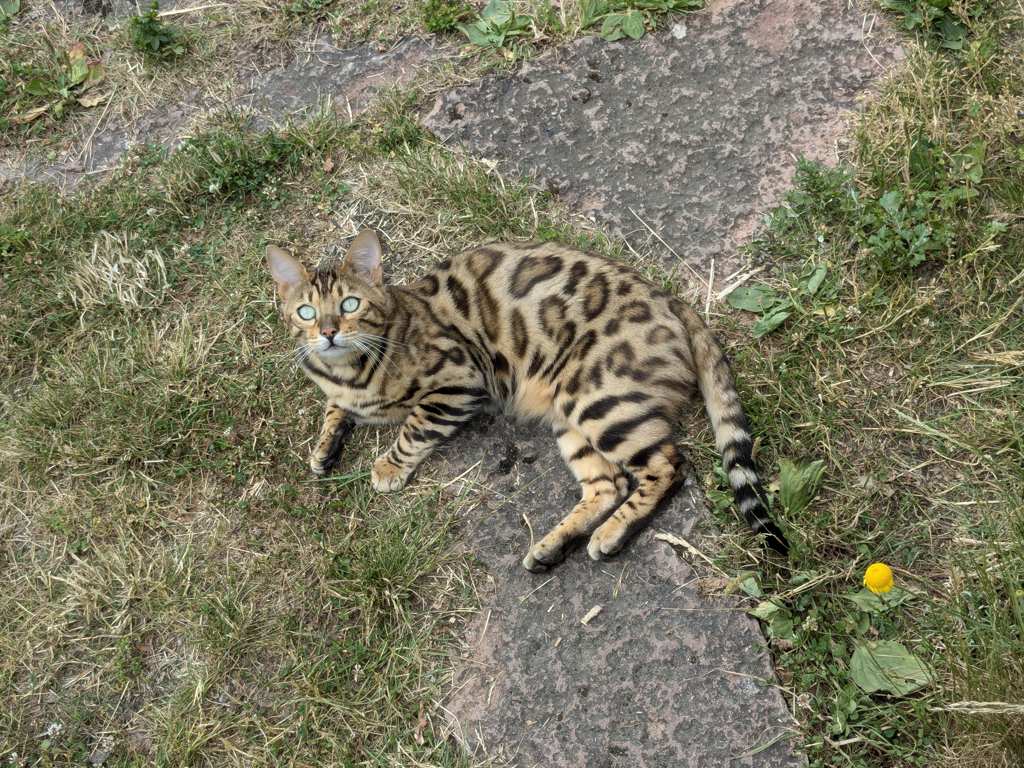
An athletic, intelligent, rosetted cat - medium to large in The International Cat Association (TICA) breed description, at 6 to 15 pounds with males generally larger than females - who plays hard, bonds hard, and rewards owners who plan early. Individual Bengals commonly live well into their teens, but the one peer-reviewed life table is more sobering: life expectancy at birth of 8.5 years, from a small sample of 73 Bengal deaths, against 11.7 years for UK companion cats overall (Teng et al., 2024). Plan for the long life, and insure against the risks that can shorten it.
Enroll as a kitten, before any heart murmur, anemia finding, or bout of chronic diarrhea is in the records - the heart screening story is the reason timing matters most in this breed.
Cost figures are typical ranges, not quotes or guarantees. Your premium depends on your cat's age, your zip code, and the deductible and reimbursement level you choose.
Common health issues in Bengals
Heart disease (hypertrophic cardiomyopathy, HCM)
Risk level: Common / expensive
The most common heart disease in cats, according to Cornell's Feline Health Center, and Cornell lists Bengals among the breeds in which it is more prevalent, with genetics suggested to play a role. The ACVIM consensus statement on feline cardiomyopathy also lists Bengals among the predisposed breeds - but unlike Maine Coons and Ragdolls, this breed has no DNA test for its HCM, and genetic testing is recommended only for those two breeds. Screening is therefore the echocardiogram itself, repeated over time, which makes heart screening a recurring cost in this breed rather than a one-off test. No trustworthy Bengal-specific HCM percentage exists, so this page does not invent one.
Pyruvate kinase deficiency (PK deficiency)
Risk level: Common
An inherited hemolytic anemia caused by a variant in the PKLR gene (Grahn et al., 2012, UC Davis), passed on as an autosomal recessive with wide variation in onset and severity. In that study's Bengal sample of 1,340 cats, 925 were clear, 390 carried one copy of the variant, and only 25 carried two copies; the mutant allele frequency in the sample was 16.4%. That 16.4% is an allele frequency in a tested sample, not the share of Bengals who become ill. A DNA test exists (UC Davis Veterinary Genetics Laboratory), and breeding two carriers together is expected to produce 25% affected kittens, so for most owners this is a breeder-conversation story: ask for PK results by name.
Bengal progressive retinal atrophy (PRA-b)
Risk level: Common
A breed-specific inherited eye disease that leads to blindness, caused by a variant in the KIF3B gene - a different gene from the CEP290 variant behind the rdAc form described on our Siamese page (Ofri et al., 2015, UC Davis). Changes begin remarkably early, with retinal degeneration present by about 8 to 9 weeks of age and visual problems evident by about 1 year. There is no treatment, but a DNA test exists and tested breeding prevents affected kittens, so this is the second test to ask a breeder about by name.
Tritrichomonas and chronic diarrhea
Risk level: Common
Tritrichomonas foetus is a parasite that causes chronic large-bowel diarrhea, and the international ABCD guidelines list pedigree breeds such as the Bengal and Siamese as predisposed, with infection most common in young cats from multicat homes and pedigree breeding catteries. In a case series of 104 PCR-positive pet cats (Xenoulis et al., 2013), diarrhea was reported in 98% of cases and lasted a median of 135 days, and Bengals were the most common purebred in the series at 13 of the 104 cats - that is the makeup of one case series, not a Bengal prevalence rate, and no trustworthy breed rate exists. The practical point matters more than any percentage: a Bengal kitten from a cattery with persistent large-bowel diarrhea deserves a Tritrichomonas PCR early, not months of food trials.
Hereditary cataracts
Risk level: Less common
Hereditary cataracts sound alarming, and in this breed they are usually a monitoring story. In a French study of 51 Bengals (Bourget et al., 2018), 23 cats (45%) had cataracts, mostly in both eyes and judged apparently nonprogressive, and visual impairment was never reported; a Polish study of 223 Bengals found 75 cats (33%) affected, again with no demonstrable vision problems. Both studies point to an inherited origin. Know about it, keep up eye checks, and do not panic: for most Bengals these are early, incidental findings, not a surgery story.
Pyruvate kinase deficiency is a breeder-test story in two breeds on this site. Our Norwegian Forest Cat insurance guide covers the same PK test from that breed's angle, alongside its breed-specific metabolic disease and its ultrasound-only heart screening. Our Abyssinian insurance guide covers the same PK test from that breed's angle, the breed where this anemia was first documented.
What does pet insurance cost for a Bengal?
Start from the $32.21/month national cat average (NAPHIA, 2024 data) as an estimate only; there is no trustworthy Bengal-specific price to quote here. The value of a policy for this breed concentrates in recurring heart screening by echocardiogram, anemia workups if they ever arise, and a young cat's gut workup, while its two DNA-test conditions are mainly breeder-conversation stories and its cataracts are usually a monitoring story.
For context, the national average premium for cats is roughly $32/month - but breed, age, and location move that number a lot. Estimate your premium with our cost calculator, or read the full cat insurance hub for how cat coverage works.
What to look for in a policy for a Bengal
- Enroll as a kitten, before any heart murmur, anemia finding, or bout of chronic diarrhea is in the records - the heart screening story is the reason timing matters most in this breed.
- Confirm that hereditary conditions are covered, because pyruvate kinase deficiency and Bengal PRA are this breed's inherited core.
- Ask how repeat echocardiograms and chronic gut workups are treated under the plan's limits, because heart screening repeats and a diarrhea workup can stretch over months.
- Choose a limit that could survive years of heart disease management, not just one emergency.
- Keep the deductible at a level you can pay on a hard day without hesitation - the policy only protects your cat if you can afford to use it.
Compare insurers for your Bengal
Typical plan options from major insurers:
| Insurer | Reimbursement | Annual limit | Waiting periods | Standout feature | Quote |
|---|---|---|---|---|---|
| Spot | 70%, 80% or 90% | $2,500 - unlimited | 14 days (accident & illness) | Preventive-care add-on available. | Get a quote |
| Trupanion | 90% | Unlimited payouts (no annual cap) | 5 days (injury) / 30 days (illness) | Per-condition lifetime deductible; direct vet payment option. | Get a quote |
| Embrace | 70%, 80% or 90% | $5,000 - $30,000 | No wait (accident) / 14 days (illness) / 6 mo (orthopedic, varies by state) | Deductible shrinks $50 each claim-free year. | Get a quote |
| Pets Best | 70%, 80% or 90% | $5,000 or unlimited | 3 days (accident) / 14 days (illness) / 6 mo (cruciate) | Wellness add-on; short accident waiting period. | Get a quote |
| Lemonade | 70%, 80% or 90% | $5,000 - $100,000 | No wait (accident, most states) / 14 days (illness) / 30 days (orthopedic) / 6 mo (cruciate) | Preventive packages; not offered in every state. | Get a quote |
| ASPCA Pet Health Insurance | 70%, 80% or 90% | Multiple annual-limit options | 14 days (accident & illness) | Preventive-care add-on available. | Get a quote |
| Figo | 70%, 80%, 90% or 100% | Up to unlimited annual max | 1 day (accident) / 14 days (illness) / 6 mo (orthopedic) | One of the few with a 100% reimbursement option. | Get a quote |
| Fetch | 70%, 80% or 90% | $5,000 - unlimited | No wait (accident) / 15 days (illness) / 6 mo (orthopedic) | Covers sick-visit exam fees. | Get a quote |
Plan options shown are typical ranges widely published by each insurer; details change and vary by state. Always confirm current terms on the insurer's website before enrolling. Quote buttons link directly to each insurer's website. We don't earn a commission on these links yet.
Other cat breed guides
- Maine Coon
- Ragdoll
- British Shorthair
- Siamese
- Persian
- Sphynx
- Scottish Fold
- Norwegian Forest Cat
- Russian Blue
- Abyssinian
- Devon Rex
- American Shorthair
Frequently asked questions
Is pet insurance worth it for a Bengal?
For most Bengal owners, yes - this is a breed where screening, treatment for its known conditions, and dental work can add up to far more than years of premiums. The math favors insurance most when a breed's common conditions are expensive or repeat over time, which is the case here.
When should I insure my Bengal?
As early as possible - ideally as a kitten. Conditions diagnosed before enrollment are excluded as pre-existing, and this breed's predispositions mean waiting is the expensive mistake.
What is the best pet insurance for Bengals?
There is no single best insurer for every cat - the right pick depends on your budget, your cat's age, and which conditions worry you most. Compare annual limits, hereditary-condition terms, dental terms, and reimbursement rates across the table above, then run real quotes. (BreedCover may earn a commission if you buy through our links.)