Last updated: November 2026
Pet insurance for Devon Rex cats
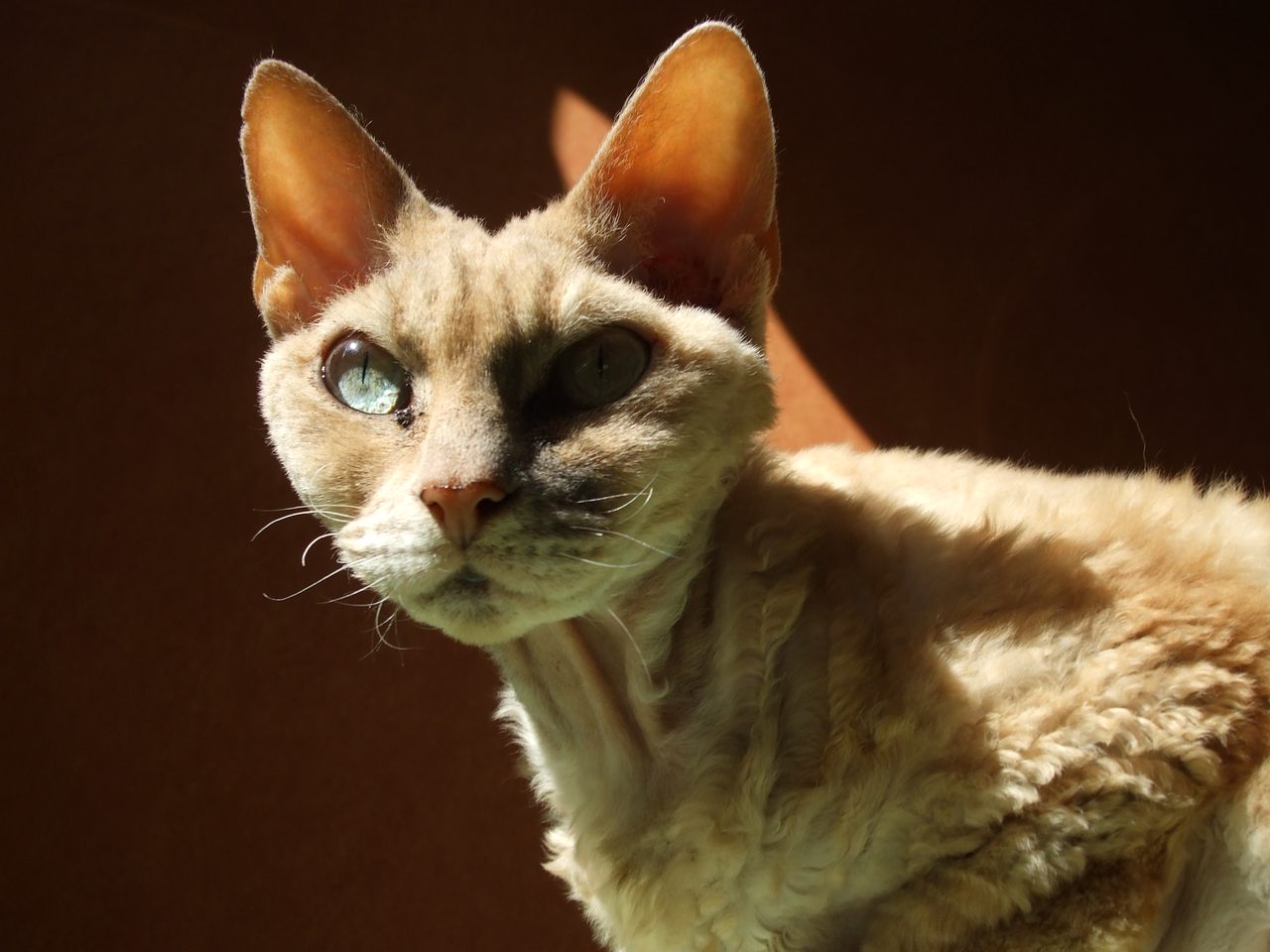
The pixie of the cat fancy, in the words of The International Cat Association (TICA): a small to medium, muscular cat with huge low-set ears and a short, velvety coat that ripples with waves, weighing on average 6 to 9 pounds, with males heavier than females. Every Devon Rex descends from Kirlee, a curly-coated kitten born in 1960 in Buckfastleigh, Devon, England. This is a people-loving cat who follows her person from room to room, and her health story has a rare shape: the breed's worst inherited disease can be prevented by a $47 breeder DNA test, while its heart risk has no DNA test at all and is managed by a screening habit instead. No studied breed lifespan exists for the Devon Rex, so this page plans honestly for a long-lived indoor cat without printing a number.
Enroll as a kitten, before any muscle weakness note, heart murmur, luxating patella, or skin finding is on the record.
Cost figures are typical ranges, not quotes or guarantees. Your premium depends on your cat's age, your zip code, and the deductible and reimbursement level you choose.
Common health issues in Devon Rex cats
Congenital myasthenic syndrome (Devon Rex myopathy)
Risk level: Common / expensive
This is the breed's signature condition, and the hopeful part comes first: it is preventable by testing. Congenital myasthenic syndrome, historically called Devon Rex myopathy or hereditary spasticity, is a congenital muscle weakness caused by a variant in the COLQ gene (Gandolfi et al., 2015, Animal Genetics; Abitbol et al., 2015, PLoS ONE, reporting the same missense mutation independently). It is autosomal recessive: a cat with two copies is affected, while carriers with one copy are unaffected but pass the variant to about half of their kittens on average (UC Davis Veterinary Genetics Laboratory). Signs appear in the first weeks of life, recorded at 3 to 23 weeks in the original case series: a head and neck that droop forward, head bobbing, protruding shoulder blades, a swallowing weakness that can widen the esophagus, and a general weakness and tiredness with effort, and affected cats can be lost to choking on food or aspiration pneumonia by two years of age. In the Gandolfi study, the variant's allele frequency was about 2.0% in Devon Rex cats, and it was absent in over 350 cats of other breeds tested; that 2.0% is a study allele frequency, not a share of Devon Rex cats who become ill. A DNA test has existed since 2015, the UC Davis test costs $47, and testing is compulsory for breeding Devon Rex and Sphynx cats under GCCF rules in the UK. Buy from tested parents and this condition should never be your claim; buy untested and it is exactly the kind of early, expensive, sometimes fatal diagnosis a kitten policy exists for.
Hypertrophic cardiomyopathy (HCM)
Risk level: Common
The heart risk in this breed is real, and it is managed by habit, not by a swab. The Devon Rex is listed among the breeds in which hypertrophic cardiomyopathy, the most common feline heart disease, is more prevalent (VetSpecialists, the American College of Veterinary Internal Medicine's specialist resource), and its screening guidance is periodic echocardiography for at-risk breeds in which there is no genetic test, naming the Devon Rex. Reviews of the genetics of feline HCM (Boeykens et al., 2024, and the 2024 global HCM working group summary) found no studied candidate variant that caused significant disease in Devon Rex cats, and recommend routine genetic testing only for the two validated MYBPC3 tests, in Maine Coons and Ragdolls. So this page prints no Devon Rex heart percent and promises no heart DNA test, because neither exists. What exists is a rhythm: repeat echocardiograms, typically $300 to $800 a time in published US cost guides, and a policy that keeps paying for repeat heart workups and cardiology across a life.
Skin and coat: yeast, grease, and a rippled coat
Risk level: Common
The Devon Rex curly coat and the Sphynx hairless coat are two different recessive mutations in the same gene, KRT71 (Gandolfi et al., 2010; UC Davis Veterinary Genetics Laboratory coat test page, which lists the Devon curly allele as recessive to the Sphynx hairless allele). That coat sheds little, and one plain sentence belongs here: a Devon Rex still produces the Fel d 1 protein found in cat skin and saliva, so this is a low-shedding cat, not an allergy-free cat. Skin is the recurring work. The WAVD clinical consensus guidelines (Bond et al., 2020) state that Devon Rex and Sphynx cats are prone to high carriage rates of Malassezia yeast and a generalized seborrheic dermatitis that responds to oral itraconazole. The study labels matter, so here they are, kept separate on purpose: in one cross-sectional survey, Malassezia was found in 90% of Devon Rex cats, against 50% of domestic shorthairs (Bond et al., 2008), and in a nail fold study, Malassezia yeasts were found in 100% of Devon Rex nail folds sampled, against 42% of cats of other breeds (Colombo et al.). Those are carriage findings in named studies, not a breed illness rate. The owner-facing translation is a recurring management cost: medicated bathing, vet visits, and antifungal courses across a life. Two smaller notes ride along: a papular skin rash called urticaria pigmentosa is documented in this breed, specialists still debate whether it is a distinct disease or a reaction pattern, and ringworm has to be ruled out first (Noli et al., 2004; Colombo et al., 2012); and an inherited thinning of the coat, present at birth or soon after, is reported in breed health guides as uncommon, with skin protection as the management and no effective treatment.
Knees and hips
Risk level: Less common
Two joint notes, both kept qualitative because the verified record is qualitative. The Devon Rex is listed as predisposed to patellar luxation, kneecaps that slip out of place, in the prior literature summarized by Cerna et al. (2021) and in breed health guides: luxation is graded 1 to 4, most cases in pedigree cats are mild grades 1 or 2, and surgery is generally reserved for grades 3 and 4. No Devon Rex percent was verified, so none is printed here; the large percent in that study belongs to all pedigree cats together, not to this breed. Hips carry the same discipline: Low et al. (2019, Scientific Reports) note evidence that feline hip dysplasia may be more common in some breeds, naming the Devon Rex, while cautioning that small sample sizes make the differences hard to quantify. Knees and hips can both be affected in the same cat. The insurance point is modest and honest: a slipping kneecap written down at a kitten checkup is one more reason to enroll before the first finding exists.
A rare bleeding disorder, and teeth
Risk level: Less common
A rare historical note, framed honestly. A vitamin K dependent coagulopathy, a deficiency of clotting factors II, VII, IX, and X, was reported in a small number of Devon Rex cats in the early 1990s (Maddison et al., 1990; Soute et al., 1992, which identified the mechanism; Littlewood et al., 1995), and the inherited Devon Rex disorder is listed in the Merck Veterinary Manual and Cornell's eClinpath. Affected cats' clotting values normalized on oral vitamin K. This page does not claim the defect has been bred out of the breed; that rests on a single breed association source. The practical angle is surgical: unexplained bleeding around a routine neuter is exactly the kind of surprise bill a policy absorbs. Teeth are the predictable half of this slot: cleanings with extractions commonly run $500 to $2,000, the need repeats across a life, and dental work usually sits in wellness add-ons rather than the base accident and illness policy.
Two of this breed's stories are shared with siblings on this site. Our Sphynx insurance guide covers the same COLQ muscle condition and the same KRT71 coat gene from that breed's angle, alongside its own repeat heart screening story. Our Maine Coon insurance guide covers the opposite heart story: a breed whose heart risk does have a validated DNA test, which is exactly what the Devon Rex heart risk does not have.
What does pet insurance cost for a Devon Rex?
Start from the $32.21/month national cat average (NAPHIA, 2024 data) as an estimate only; no Devon Rex-specific premium was verified. The value of a policy here concentrates in repeat echocardiograms, recurring skin workups and antifungal courses, possible knee surgery, and dental years. The CMS story is the exception that proves the rule: the expensive version of this breed's health is mostly bought away by choosing a tested breeder, and the policy is for everything testing cannot prevent. Insure a healthy kitten and let the policy age with the cat.
For context, the national average premium for cats is roughly $32/month - but breed, age, and location move that number a lot. Estimate your premium with our cost calculator, or read the full cat insurance hub for how cat coverage works.
Dental care is a recurring cost for this breed, so it helps to know the numbers early. Our cat teeth cleaning cost guide breaks down the typical $300 to $700 cost of a routine cleaning and what can push a bill higher.
What to look for in a policy for a Devon Rex
- Enroll as a kitten, before any muscle weakness note, heart murmur, luxating patella, or skin finding is on the record.
- Confirm hereditary conditions are covered, and ask specifically whether vet-recommended echocardiograms are covered, since screening is the main recurring cost this breed generates.
- Ask the breeder for both parents' CMS DNA results (the test costs $47 and GCCF requires it for breeding cats in the UK), recent echocardiogram reports, patella and hip checks, and whether any kitten in the line bled unexpectedly at neutering.
- Keep the deductible at a level you can pay without thinking; this breed's claims pattern is repeat mid-size bills (skin, echoes, dental) rather than one catastrophe.
Compare insurers for your Devon Rex
Typical plan options from major insurers:
| Insurer | Reimbursement | Annual limit | Waiting periods | Standout feature | Quote |
|---|---|---|---|---|---|
| Spot | 70%, 80% or 90% | $2,500 - unlimited | 14 days (accident & illness) | Preventive-care add-on available. | Get a quote |
| Trupanion | 90% | Unlimited payouts (no annual cap) | 5 days (injury) / 30 days (illness) | Per-condition lifetime deductible; direct vet payment option. | Get a quote |
| Embrace | 70%, 80% or 90% | $5,000 - $30,000 | No wait (accident) / 14 days (illness) / 6 mo (orthopedic, varies by state) | Deductible shrinks $50 each claim-free year. | Get a quote |
| Pets Best | 70%, 80% or 90% | $5,000 or unlimited | 3 days (accident) / 14 days (illness) / 6 mo (cruciate) | Wellness add-on; short accident waiting period. | Get a quote |
| Lemonade | 70%, 80% or 90% | $5,000 - $100,000 | No wait (accident, most states) / 14 days (illness) / 30 days (orthopedic) / 6 mo (cruciate) | Preventive packages; not offered in every state. | Get a quote |
| ASPCA Pet Health Insurance | 70%, 80% or 90% | Multiple annual-limit options | 14 days (accident & illness) | Preventive-care add-on available. | Get a quote |
| Figo | 70%, 80%, 90% or 100% | Up to unlimited annual max | 1 day (accident) / 14 days (illness) / 6 mo (orthopedic) | One of the few with a 100% reimbursement option. | Get a quote |
| Fetch | 70%, 80% or 90% | $5,000 - unlimited | No wait (accident) / 15 days (illness) / 6 mo (orthopedic) | Covers sick-visit exam fees. | Get a quote |
Plan options shown are typical ranges widely published by each insurer; details change and vary by state. Always confirm current terms on the insurer's website before enrolling. Quote buttons link directly to each insurer's website. We don't earn a commission on these links yet.
Other cat breed guides
- Maine Coon
- Ragdoll
- British Shorthair
- Siamese
- Bengal
- Persian
- Sphynx
- Scottish Fold
- Norwegian Forest Cat
- Russian Blue
- Abyssinian
- American Shorthair
Frequently asked questions
Is pet insurance worth it for a Devon Rex?
For most Devon Rex owners, yes - this is a breed where screening, treatment for its known conditions, and dental work can add up to far more than years of premiums. The math favors insurance most when a breed's common conditions are expensive or repeat over time, which is the case here.
When should I insure my Devon Rex?
As early as possible - ideally as a kitten. Conditions diagnosed before enrollment are excluded as pre-existing, and this breed's predispositions mean waiting is the expensive mistake.
What is the best pet insurance for Devon Rex cats?
There is no single best insurer for every cat - the right pick depends on your budget, your cat's age, and which conditions worry you most. Compare annual limits, hereditary-condition terms, dental terms, and reimbursement rates across the table above, then run real quotes. (BreedCover may earn a commission if you buy through our links.)